 Save and group your favourite furniture
  Create separate moodboards for each project
  Export your moodboards as PDFs



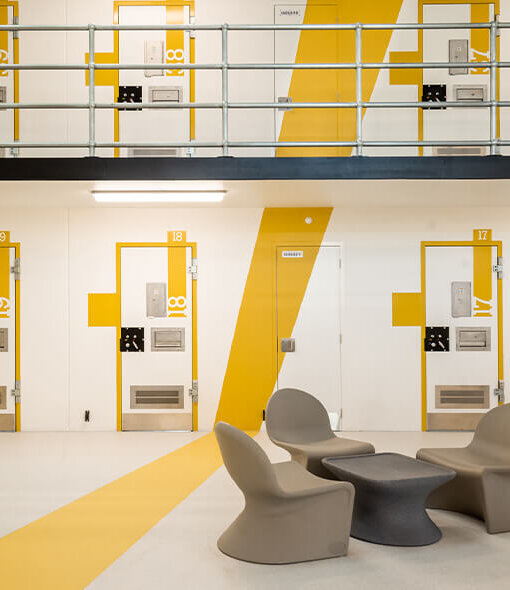
The Role of Simplicity in Aged Care Spaces
In aged care environments, small design decisions can have a significant impact. A misplaced chair, a busy finish, or an overload of visual cues can quickly shift a space from intuitive to overwhelming.
Drawing from the National Aged Care Design Principles and Guidelines, minimal clutter is more than a design preference. It forms the foundation of calmer, more navigable environments. For residents, particularly those experiencing cognitive or sensory changes, the environment does more than surround them, it actively shapes how they move, interpret, and engage with daily life.
When Spaces Become Difficult to Read
Clutter is often understood in physical terms, too much furniture, too many objects, but in aged care, visual clutter can be just as disruptive.
Spaces layered with competing patterns, unnecessary elements, or excessive visual information can become difficult to interpret. What may feel like personality or visual interest can instead read as noise. A corridor loses its sense of direction. A room loses clarity of purpose.
Research in dementia-friendly design consistently highlights how excessive visual stimulation can contribute to confusion, hesitation, and increased anxiety within the built environment.
Over time, this subtle disorientation begins to affect behaviour. Residents may hesitate before moving, rely more heavily on staff, or withdraw from shared spaces altogether. Confidence diminishes, anxiety increases, and environments intended to support wellbeing begin to do the opposite.
In this context, reducing clutter is not about creating emptiness. It is about restoring clarity.
Designing for Ease, Not Effort
The goal of a well-considered aged care environment is not to instruct, but to feel instinctive.
Spaces should be navigated without pause, without the need to interpret, question, or second-guess.
Achieving this requires restraint, where every element is considered not only for its function, but for how it contributes to the overall legibility of the space.
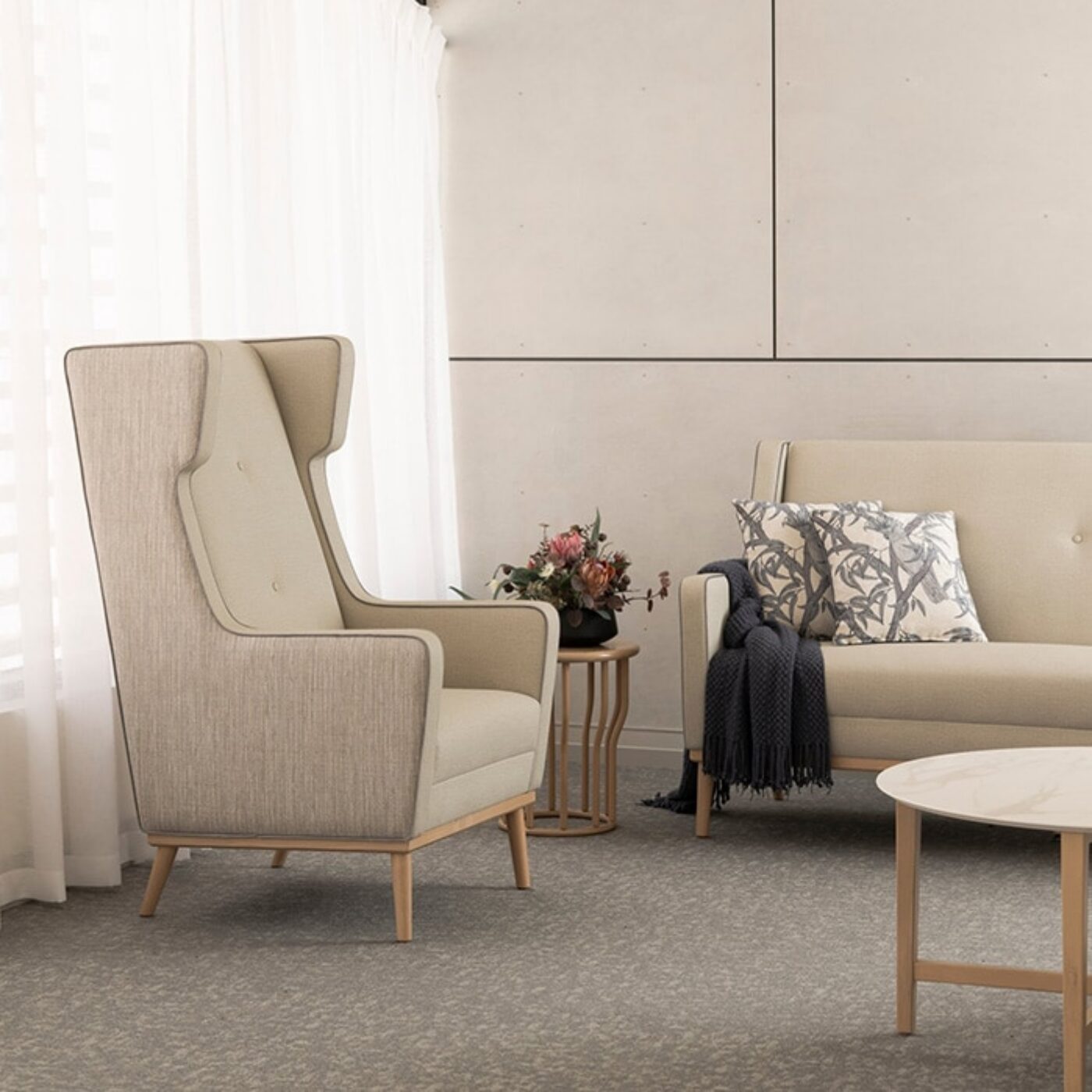
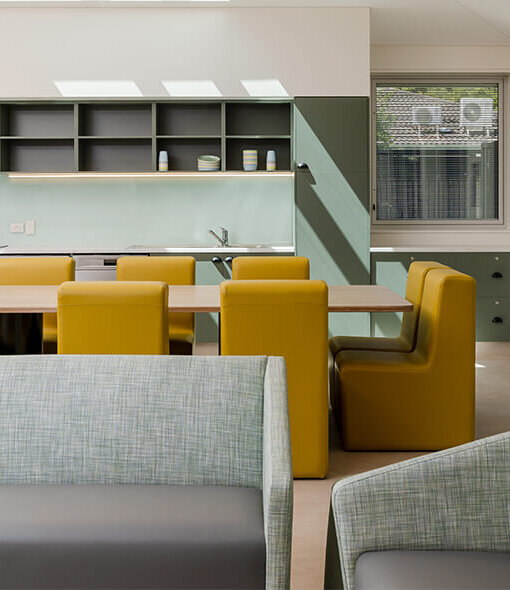
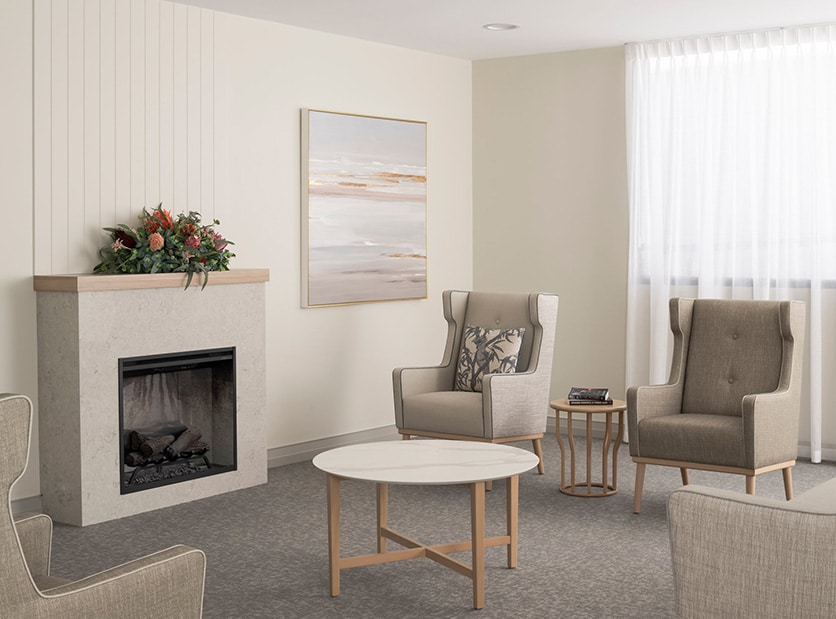
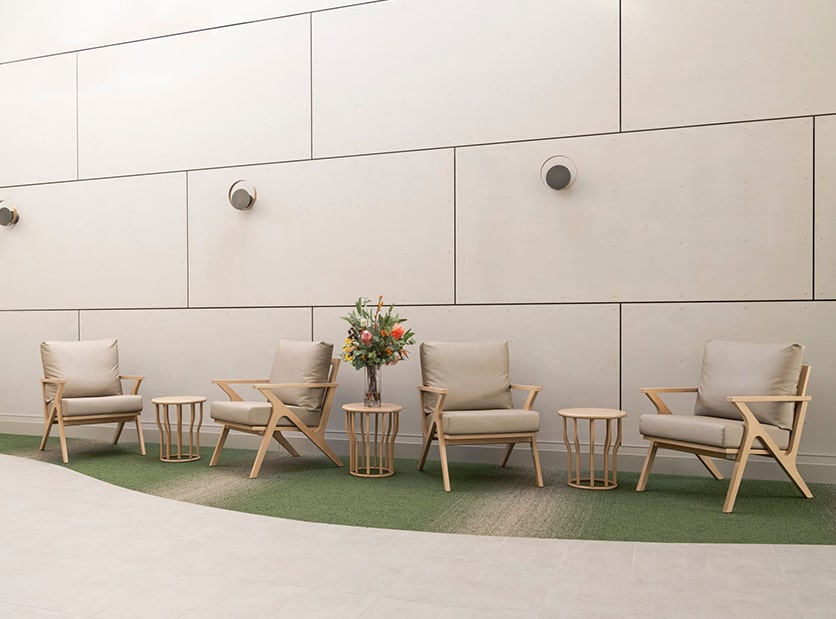
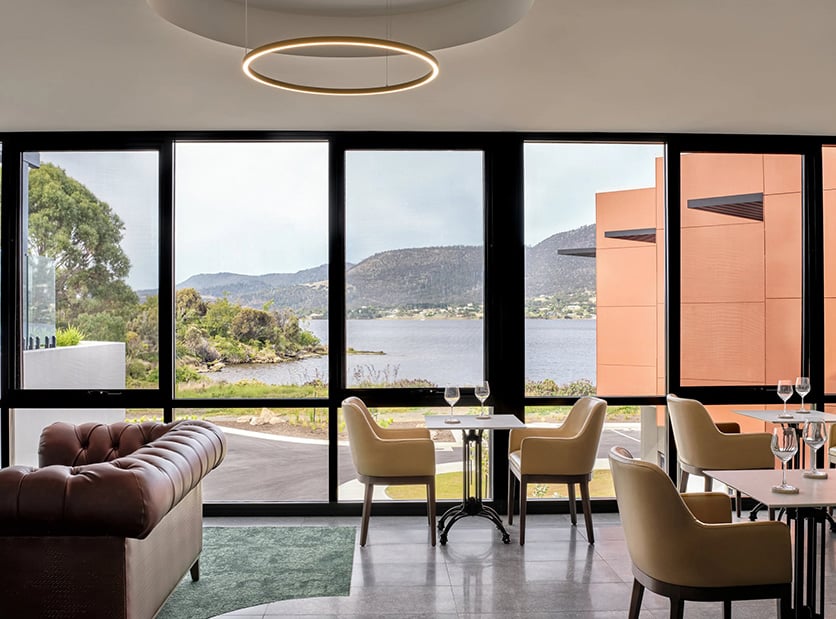
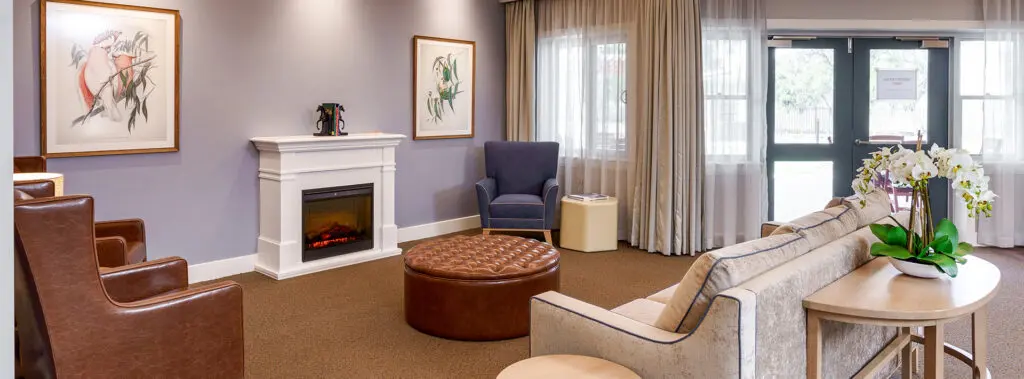
Furniture plays a quiet but defining role in this experience. Consistent finishes, softened forms, and appropriately scaled pieces help create environments that feel predictable, reassuring, and easy to understand. Clear layouts and purposeful placement support more natural movement, while helping rooms communicate their purpose without explanation.
The visual language of a space is equally important. Highly patterned finishes, reflective surfaces, or strong contrasts can distort perception. A patterned floor may appear uneven. A mirror may feel like an opening or another presence. While subtle, these moments of uncertainty can significantly affect a resident’s confidence and sense of safety.
A calmer material palette, matte finishes, plain surfaces, and gentle textures helps stabilise the environment and allows residents to trust what they are seeing.
The Quiet Work of Good Design
Often, the most effective design decisions are the least noticeable.
Aged care environments inevitably require equipment, mobility aids, and everyday essentials, but how these elements are accommodated matters. When everything is left on display, spaces can quickly feel clinical, visually busy, and emotionally overwhelming.
Thoughtful furniture and storage design offers a more balanced approach. Integrated storage, concealed compartments, and considered placement allow essential items to remain accessible without dominating the environment. The result is a space that feels calmer, lighter, and more like a place to live.
A similar principle applies to signage. While intended to guide, excessive signage can overwhelm rather than assist. Many residents navigate more confidently using subtle and familiar cues, a recognisable piece of furniture, a consistent layout, or a simple visual marker rather than relying solely on written instruction.
When design is resolved well, the space speaks for itself.
What Changes When Clutter Is Reduced
The impact of reducing clutter is often immediate, even if difficult to articulate.
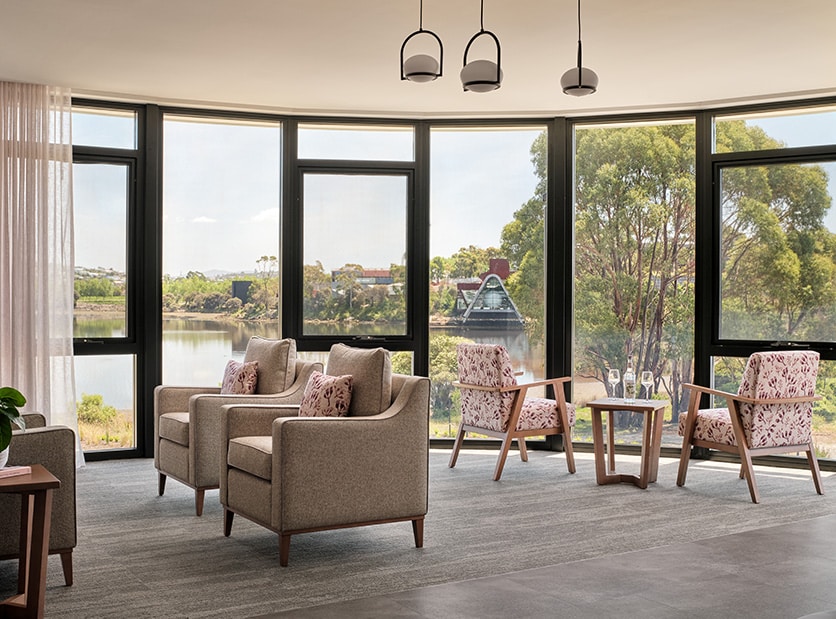
Spaces begin to feel calmer. Movement becomes more intuitive. Residents engage more freely, without the added effort of constantly interpreting their surroundings.
There is also a tangible shift in safety. Clearer pathways and fewer visual distractions can help reduce the likelihood of trips and falls not through added intervention, but through thoughtful prevention.
Perhaps most importantly, there is a renewed sense of ease. With less visual and physical demand placed upon them, residents can direct more energy towards connection, participation, and everyday living.
Intentional, Not Minimal
Minimal clutter is often misunderstood as meaning less, less furniture, less personality, less warmth. In reality, it is about being more intentional.
It is about creating environments where every element has a clear role in supporting comfort, clarity, and independence. When approached thoughtfully, simplicity does not feel sparse, it feels considered.
This perspective informs how aged care spaces come together. Not through individual pieces alone, but through how each element contributes to a more cohesive and intuitive experience.
Because when environments are resolved with intention, they quietly support the people within them and that is where their real value lies.


Get in touch today