 Save and group your favourite furniture
  Create separate moodboards for each project
  Export your moodboards as PDFs


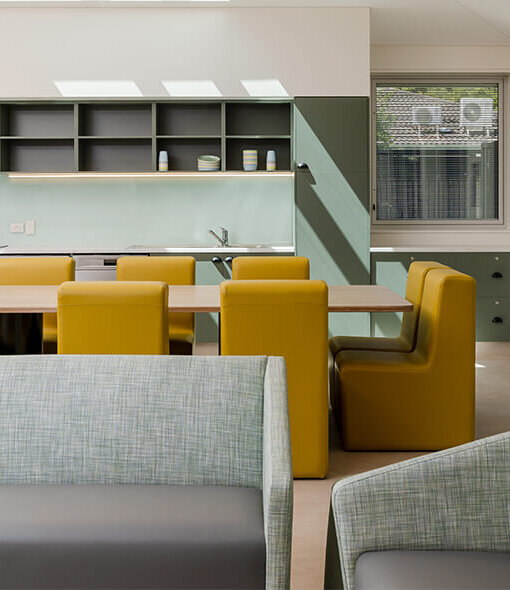

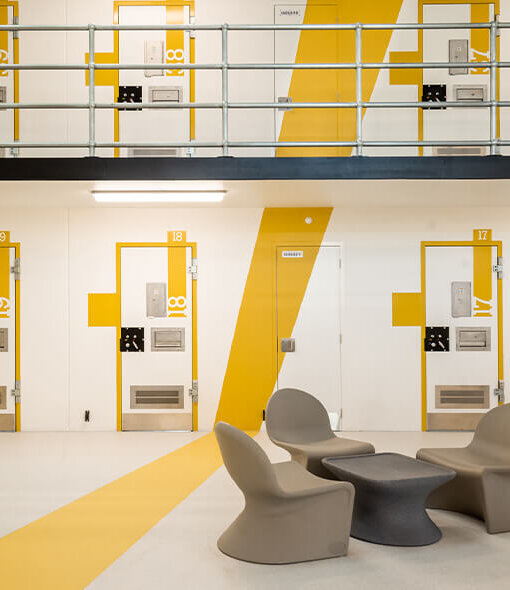
Residential aged care spaces are often judged by compliance and durability, yet it is the quieter design decisions that shape how residents experience each day. The height of a seat, the angle of a backrest, and the firmness of an armrest can either support confidence and independence or introduce daily friction and risk.
Well proportioned chairs that assist standing, softened edges that reduce injury, and fabrics that balance hygiene with comfort all influence how residents move, rest, eat, and connect. Over time, these choices affect wellbeing in ways standard commercial furniture cannot.
Fit for purpose furniture is not about ticking boxes. It begins with observing daily routines, understanding human movement, and anticipating the realities of care environments. When done well, furniture becomes a quiet enabler of safety, independence, and comfort.
Purposeful Design Meets Residential Aged Care Expertise
Aged care furniture must do far more than look presentable. Unlike other care settings, residential aged care is a home, supporting people with diverse mobility levels, cognitive needs, and daily assistance requirements.
Furniture must withstand frequent use, constant movement, and rigorous cleaning regimes, while still feeling familiar and domestic rather than institutional.
Good design starts with observation. How residents sit and stand, how staff assist movement, and how spaces are cleaned and reconfigured throughout the day. From these insights, practical design decisions emerge.
• Ergonomics support comfort and movement. Chairs are designed with the correct relationship between seat and back, subtle lumbar support, and well positioned arms to help residents stand with confidence and reduce strain.
• Practical features ease daily routines. Thoughtfully placed castors, single direction wheels, and stable proportions support safer movement for both residents and carers, allowing everyday transitions to feel natural.
• Materials balance care and comfort. Solid timber frames, fire rated foams, and moisture resistant fabrics provide durability and hygiene, while upholstery options, from digitally printed moisture barrier fabrics to woven textiles such as cryptons, introduce warmth and familiarity.
Together, these elements ensure furniture performs reliably while supporting independence and dignity throughout the day.


Because Residential Aged Care Is Not One Size Fits All
No two care environments are the same, and neither are the people who live in them. Purpose led furniture allows spaces to adapt to residents’ needs and routines, rather than requiring residents to adapt to generic solutions.
In dementia and high care environments, the role of furniture becomes even more critical. Design must subtly communicate safety and familiarity while supporting recognition and confidence. Gentle colour contrasts improve visibility, domestic textures reduce anxiety, and visual or tactile cues assist orientation.
Chairs with contrasting seat and back colours, or subtly textured armrests, help residents identify seating more easily and move with greater assurance. These principles, refined through decades of sector experience, support residents in navigating their environment safely and comfortably.
Thoughtful Design That Improves Everyday Experiences
Furniture shapes more than physical comfort. It influences how residents participate in daily life.
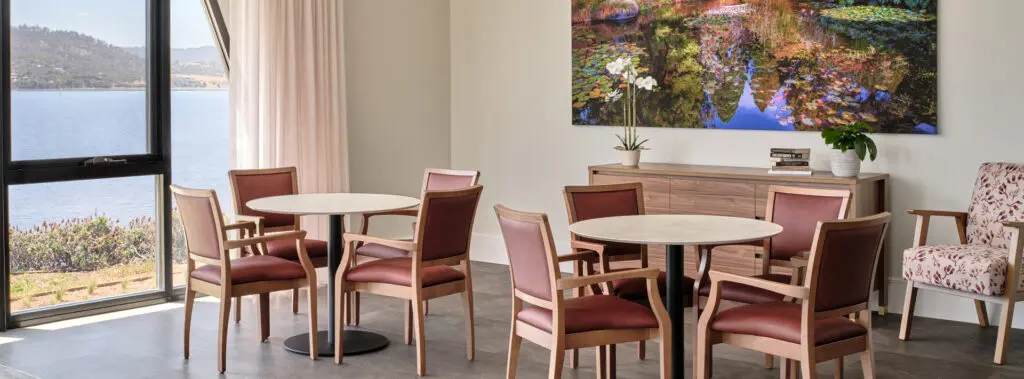
In lounges and communal areas, supportive proportions reduce fatigue and encourage social connection. In dining and activity spaces, stable movement, appropriate seat heights, and sensory cues help residents engage confidently and safely.
These details may appear small in isolation, but together they create environments where residents can move more freely, participate more fully, and feel at ease in their surroundings.


Supporting Residents Today and Tomorrow
Residential aged care environments are uniquely demanding. Furniture must respond to changing mobility, cognitive, and sensory needs while withstanding constant use and cleaning. These spaces are homes, not clinics, where comfort and familiarity matter as much as safety.
Fit for purpose design begins with understanding these realities. With teams trained in dementia care and informed by evolving sector practices, every design decision is made to support residents, staff, and visitors alike.
The value of well designed aged care furniture is not measured by first impressions alone, but by how it continues to support comfort, confidence, and wellbeing day after day. That is fit for purpose furniture at its core.
Shaping Better Experiences in Residential Aged Care
Thoughtful aged care furniture shapes routines for residents, staff, and visitors. Fit-for-purpose design creates calmer, safer, and more familiar aged care environments, supporting comfort, independence, and confidence in every space.
Chat with our team on 1800 194 194 or explore our website to learn more about our furniture solutions.


Get in touch today