 Save and group your favourite furniture
  Create separate moodboards for each project
  Export your moodboards as PDFs



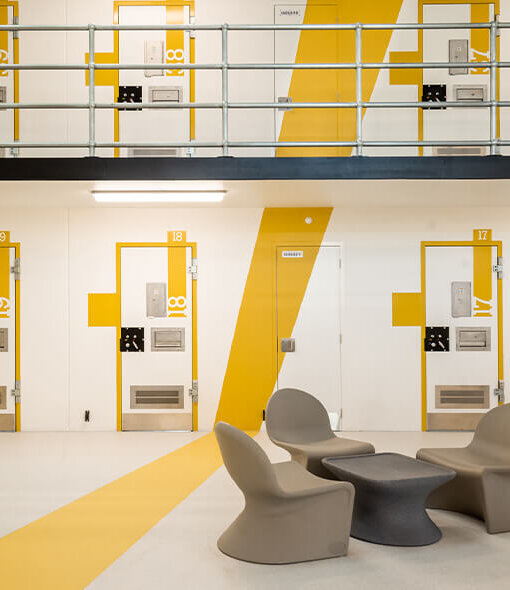
When Corridors Become Places of Care
Great care environments are often defined by their destinations. The dining room that brings people together, the lounge that encourages conversation, or the private room that offers comfort and familiarity.
Yet some of the most important experiences happen in between.
Often overlooked as purely functional thoroughfares, corridors play a far greater role in shaping how people experience their environment. They can either support confidence and independence or quietly become barriers to both.
For older Australians, particularly those living with cognitive or physical challenges, the journey itself matters. When movement feels natural and reassuring, people are more likely to stay engaged with their surroundings, maintain daily routines, and preserve a sense of autonomy.
Beyond Circulation
As care environments continue to evolve beyond institutional models, greater attention is being given to the everyday experience of movement.
Long, repetitive corridors can create uncertainty and fatigue, offering few cues about where someone is or where they are heading. Over time, this can discourage independent movement and reduce confidence.
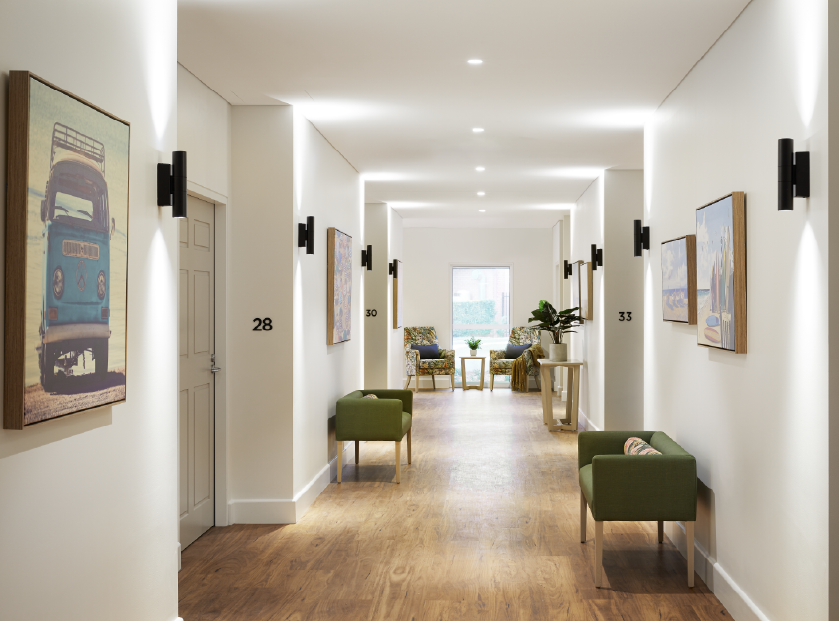
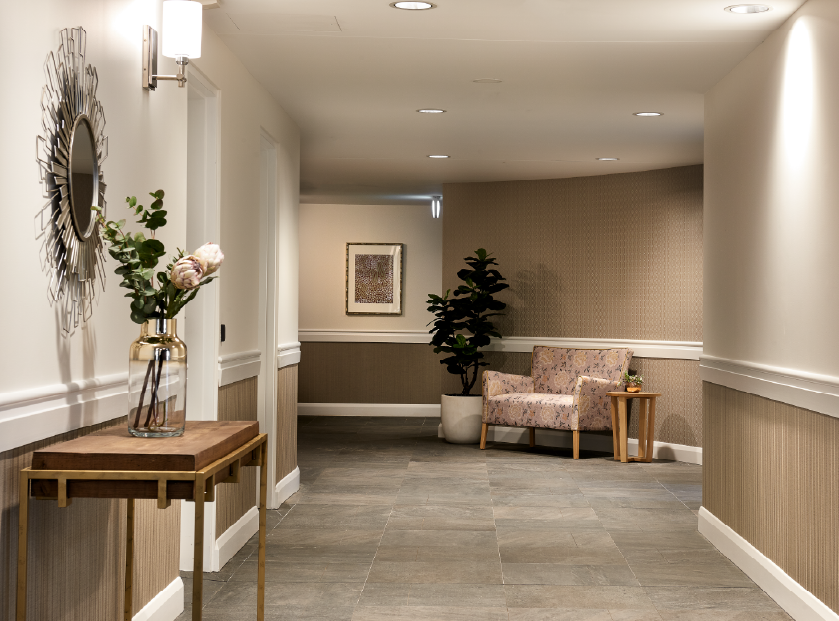
By contrast, corridors that offer moments of recognition and reassurance can change the experience entirely. A familiar piece of furniture, a comfortable place to pause, natural light, or a clear visual destination can make a journey feel more manageable and purposeful.
In this way, corridors become more than connections between rooms. They become part of the lived experience itself.
Confidence Starts Before the Journey
Wayfinding is often associated with signage, but people rarely rely on signs alone.
We naturally navigate through landmarks, visual cues and spatial memory. In care settings, these subtle signals can play a significant role in supporting orientation and reducing reliance on assistance.
The most successful environments feel intuitive rather than instructional. They help residents understand where they are and where they are going without demanding conscious effort.
Confidence, after all, begins long before the first step is taken.
The Value of Rest
Movement is not always continuous, nor should it be.
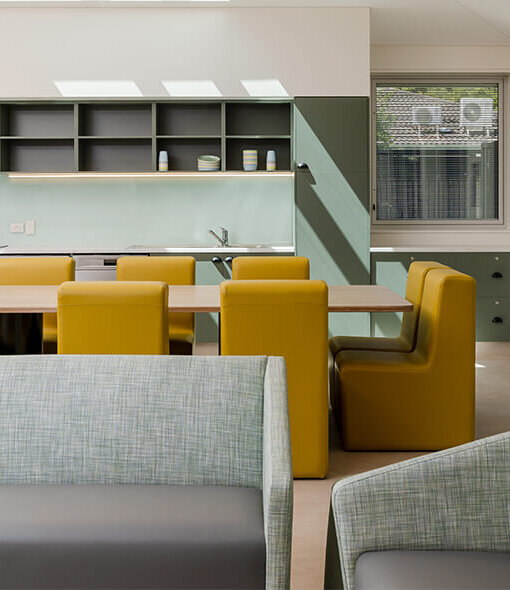
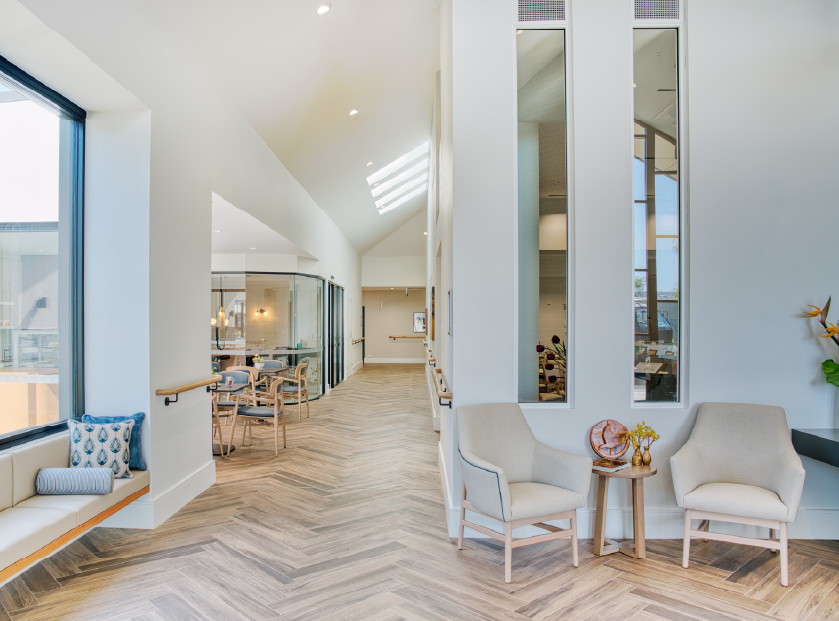
The opportunity to pause can be just as important as the ability to move. Thoughtfully positioned seating provides a moment to rest, observe, connect with others, or simply feel comfortable in the environment.
Seating within circulation spaces is more than an amenity. It provides opportunities to rest, regain confidence, and engage with the environment at a comfortable pace. For many residents, those moments of choice and pause can meaningfully support wellbeing and independence.
Independence in the Details
What helps people move confidently is often not one major intervention, but the accumulation of many small ones.
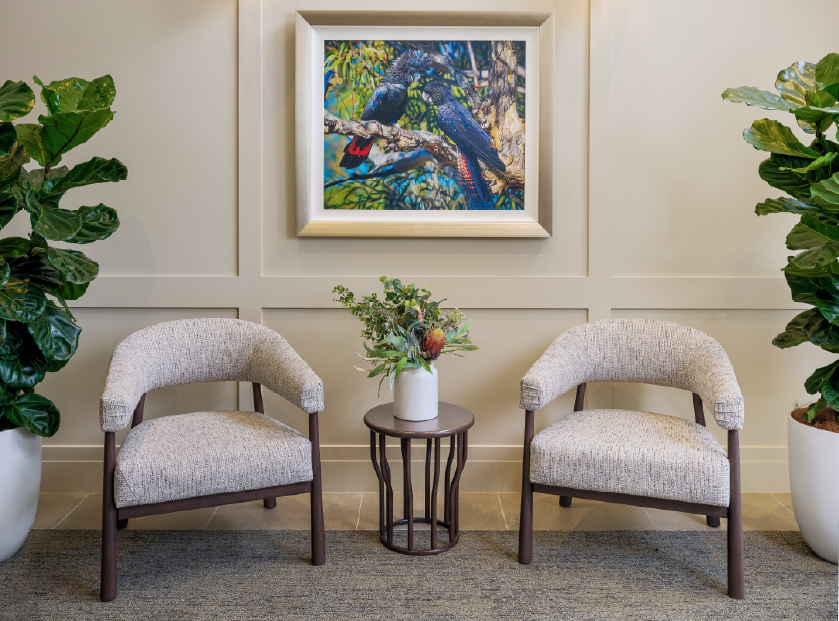
Clear sightlines, familiar landmarks, comfortable resting points and uncluttered pathways work together to reduce uncertainty and support independence throughout the day.
While these details may appear subtle in isolation, their collective impact can significantly influence confidence, comfort and independence.
The Spaces Between Destinations
As the care sector continues to focus on dignity, wellbeing and person-centred outcomes, the importance of transitional spaces is becoming increasingly clear.
A resident’s experience is shaped not only by where they spend their time, but by how comfortably they move throughout the day. The journey to a dining room, a visit to a lounge, or an unplanned conversation along the way can all contribute to connection, familiarity and independence.
Corridors may never be the focal point of a care environment, yet they often influence some of its most important outcomes. When movement feels intuitive, comfortable and safe, people are more likely to remain engaged, maintain confidence, and participate more fully in everyday life.
After decades of working alongside the care sector, one observation remains consistent. Successful environments are shaped not only by the destinations they provide, but by the journeys they enable.
Sometimes, the spaces that matter most are the ones in between.

Get in touch today