 Save and group your favourite furniture
  Create separate moodboards for each project
  Export your moodboards as PDFs


How Homelike Design Is Transforming Clinical Spaces
Healthcare environments play a meaningful role in how people feel, recover, and experience each day. For decades, hospitals prioritised efficiency, hygiene, and operational performance, often resulting in spaces that felt impersonal or overwhelming. Across Australia, this approach is shifting. Designers and care providers now recognise that environments which feel safe, familiar, and supportive can positively influence patient outcomes, staff performance, and overall quality of care.
At Crown Furniture, this evolution has been shaped by decades of experience in aged care, where the environment is not just a place of treatment. It is home. In 1999, through close collaboration with aged care providers, one principle became clear. Effective care extends beyond clinical intervention. The physical environment matters. When people feel at ease in their surroundings, they are more likely to rest well, engage with care, and recover effectively.
Lessons from Aged Care, Why Comfort Matters
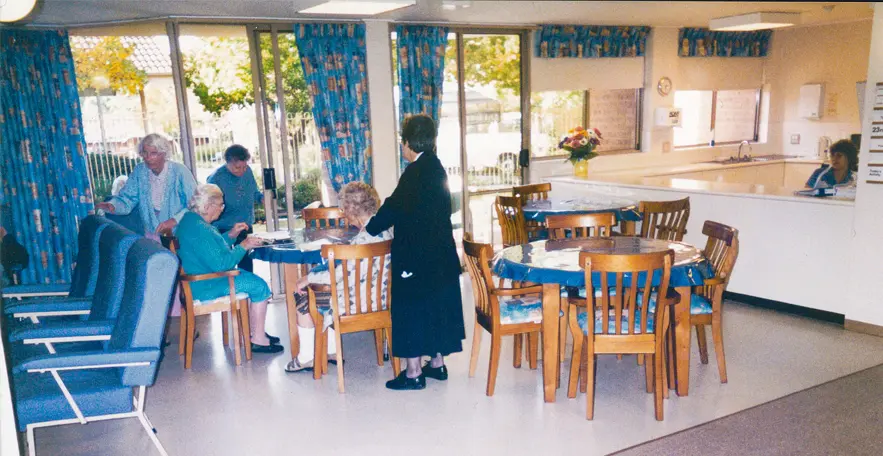
For many years, care environments were driven primarily by operational efficiency. While durability, hygiene, and safety remain essential, experience has shown that overly institutional spaces can increase stress, confusion, and disengagement. More than two decades of work in aged care has demonstrated that design directly influences behaviour, mobility, emotional wellbeing, and dignity.
These learnings are now informing healthcare environments across Australia, where hospitals and facilities are being reimagined to better support patients, families, and care teams.
The Psychology of “Homelike” Design
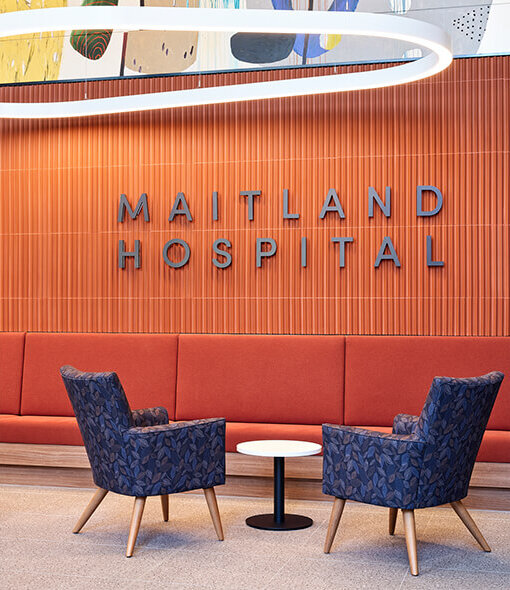
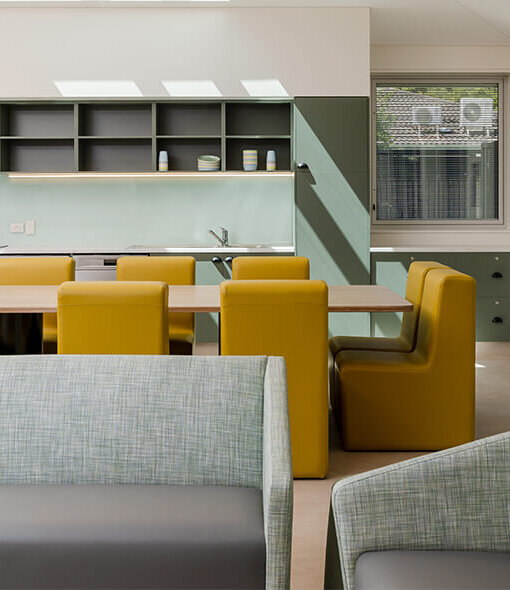
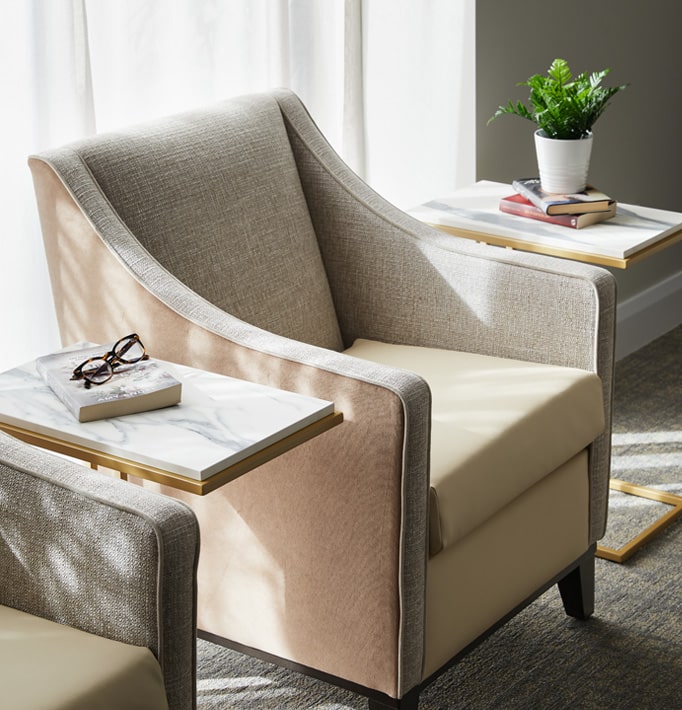
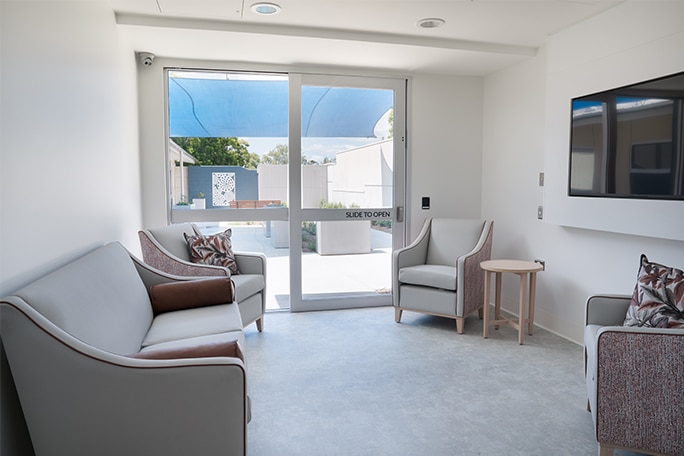
In aged care, familiarity provides reassurance. Applying this principle to healthcare means softening the clinical presence without compromising performance. Research shows that environments incorporating residential cues, such as warm lighting, soft textures, and wood-grain finishes, can help reduce stress responses and support emotional regulation.
Hard, reflective surfaces and harsh lighting can heighten anxiety, particularly for patients who are unwell or disoriented. Replacing these with matte finishes, indirect lighting, and warmer materials creates a domestic atmosphere that signals safety and calm. Acoustic comfort also plays a critical role. Soft furnishings and acoustic treatments reduce noise and echo, supporting better sleep, reduced agitation, and clearer communication.
Healing Spaces That Support Recovery
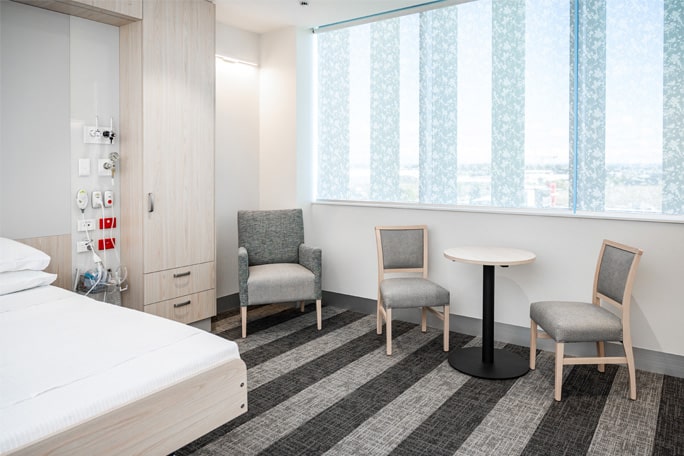
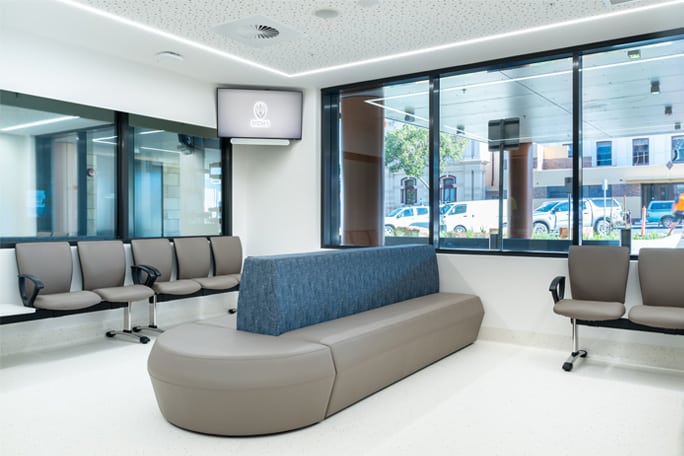
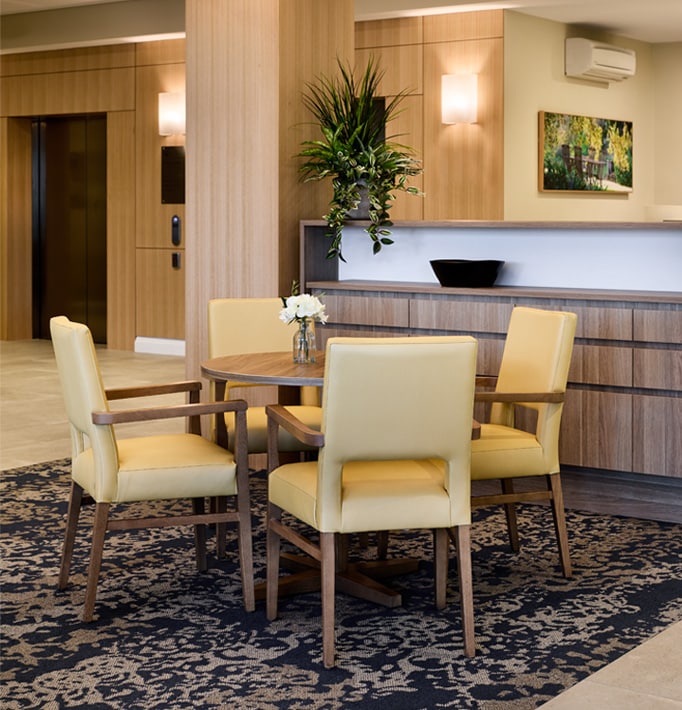
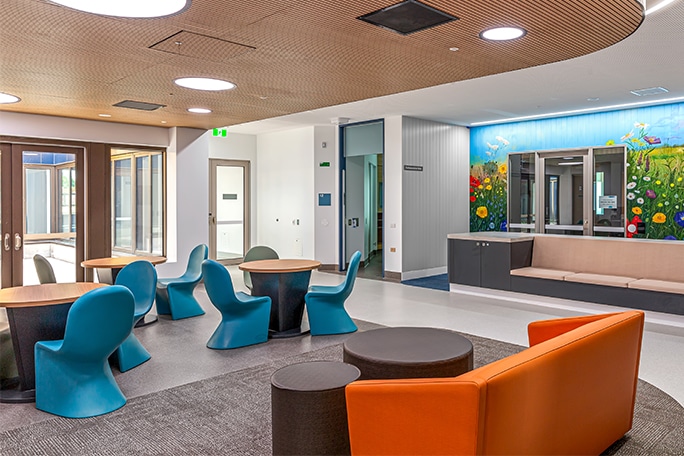
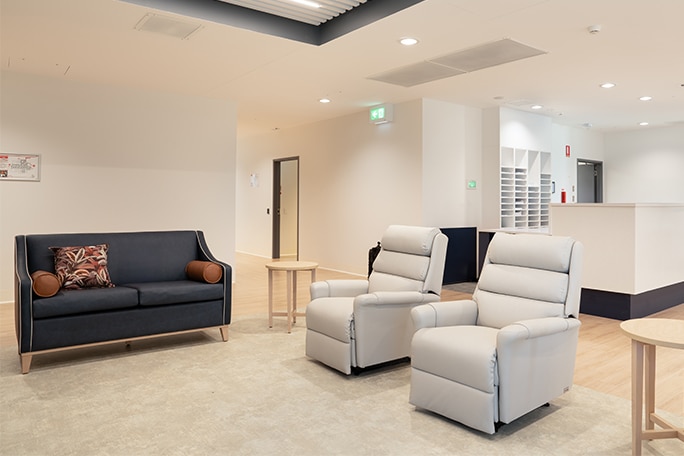
Patient rooms, waiting areas, and shared spaces are increasingly designed to feel calm and welcoming rather than clinical. Familiar layouts, softer lighting, personal storage, and opportunities for social interaction help reduce anxiety and support daily routines. These design choices promote stability during treatment, recovery, and extended stays.
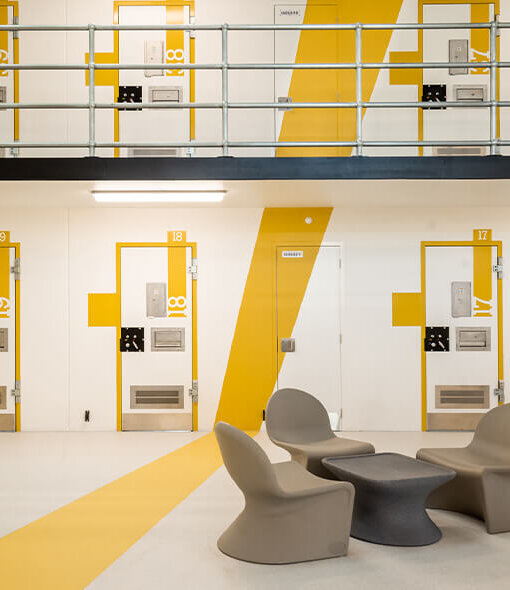
Wayfinding is another lesson drawn from aged care. Colour-coding, visual landmarks, and subtle cues help people navigate complex environments more easily, reducing confusion for patients, families, and visitors without relying solely on signage.
Furniture as a Tool for Independence and Connection
Aged care design has long recognised that furniture is not passive. It actively supports mobility, safety, and independence. In healthcare, this translates to furniture that encourages early mobilisation, helping patients move confidently and safely as part of their recovery.
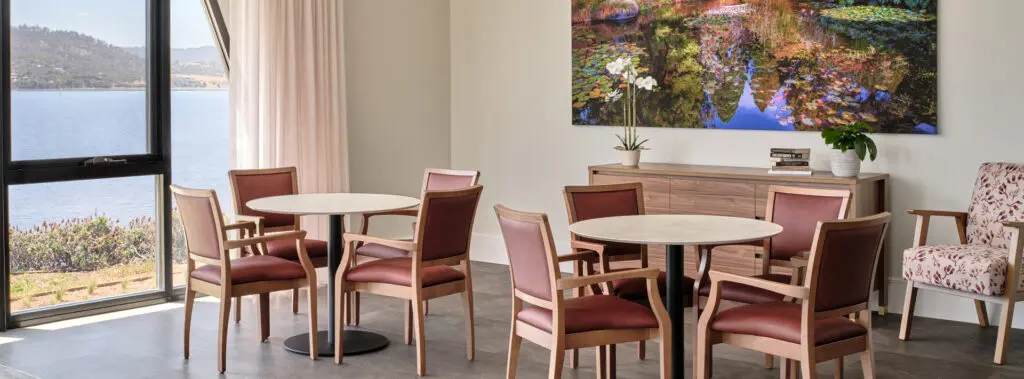
Correct seat heights make standing easier, supportive armrests provide leverage, and stable construction reduces fall risk. Communal tables and shared seating encourage interaction between patients, families, and care teams, supporting connection and emotional wellbeing. These design decisions preserve dignity, promote autonomy, and ease the physical demands placed on both patients and staff.
Integrating Safety into Aesthetics
One of the most significant lessons from aged care is that safety does not need to look clinical. Modern healthcare design integrates high-risk requirements directly into form and construction. Features such as moisture barriers, antimicrobial finishes, tamper-resistant details, and reinforced structures can be incorporated discreetly, maintaining a warm, residential appearance.
The result is furniture and environments that feel reassuring and familiar while meeting strict clinical, infection control, and safety standards.
Creating Healthcare Spaces That Balance Care and Performance
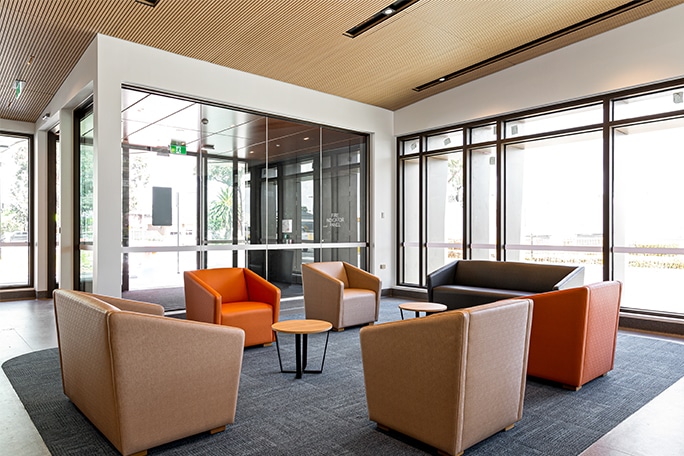
Since 2005, Crown Furniture has applied aged care principles to healthcare settings in Hospitals, Mental Health and Corrections facilities across Australia. These environments require more than visual appeal. They demand durable, compliant, and purpose-driven solutions that perform reliably over time.
Every piece is designed to meet clinical requirements while maintaining a residential feel. Features such as forward-extending arms, appropriate seat heights, and ergonomic proportions support safe movement and independence. Materials, including antimicrobial timber finishes and flame-retardant, moisture-resistant upholstery, are carefully selected to balance infection control with comfort.
Design also considers the people delivering care. Ergonomic construction, ease of cleaning, and maneuverability help reduce physical strain on staff, enabling them to focus on what matters most, providing high-quality care.
Supporting People Across Every Care Setting
Today, lessons learned in aged care are influencing the broader healthcare landscape. Hospitals, clinics, and community health spaces are being reshaped to support emotional wellbeing during acute treatment, recovery, and long-term care.
The goal has always been to reduce the clinical harshness of healthcare environments and replace it with thoughtful, human-centred design. From the texture of an armrest to the height of a sofa, residential cues are carefully translated into durable, fit-for-purpose solutions that support safety, dignity, and positive outcomes.
With Crown Furniture, healthcare providers gain more than furniture. They gain a partner committed to designing environments where care, comfort, and performance work together.
Ready to Bring the Feeling of Home to Your Facility?
Discover how our decades of experience, shaped by aged care and Australian craftsmanship, can support your healthcare environment. Together, we can create spaces where comfort and clinical performance go hand in hand. Visit our contact page online or call us on 1800 194 194 to learn more about how we can transform your facility.


Get in touch today