 Save and group your favourite furniture
  Create separate moodboards for each project
  Export your moodboards as PDFs



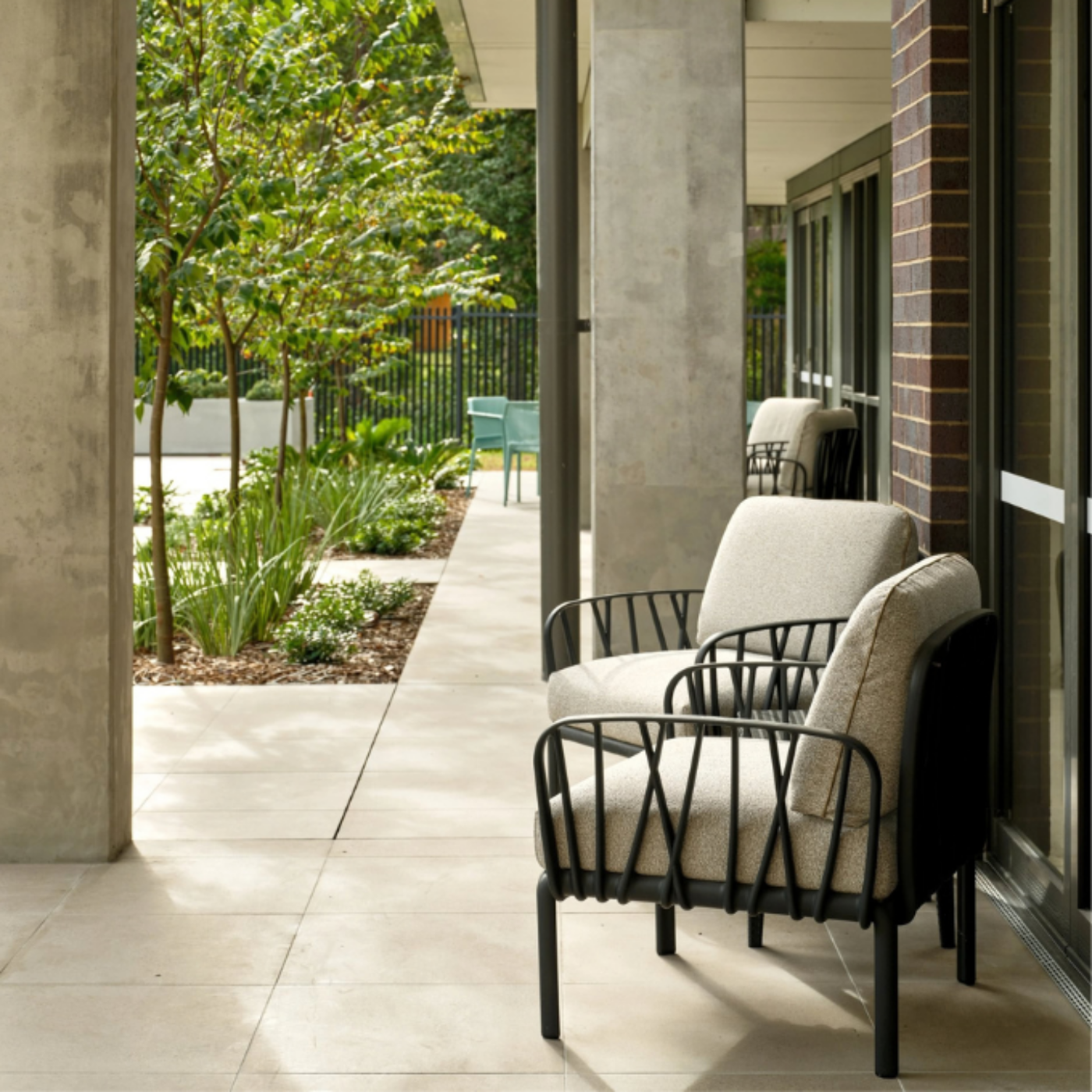
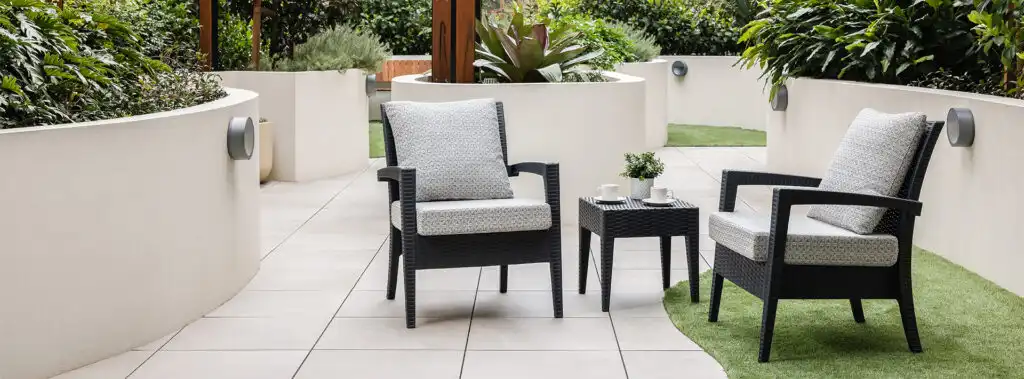
Outdoor furniture is often selected towards the end of an aged care project, once the building, landscaping and major finishes have been resolved.
That can make it easy to treat furniture as the final layer of the design.
But outdoor furniture has a different role to play.
It is exposed to Australia’s climate, used throughout the year, cleaned regularly and handled within the day-to-day operation of a residential aged care environment. It needs to perform through sun, rain, changing temperatures and repeated use while continuing to meet the functional requirements of residents, visitors and staff.
In other words, outdoor furniture is not simply something placed outside.
It is part of the environment’s long-term performance.
For architects, designers and aged care providers, this raises a more useful question than whether a product looks suitable on installation day:
How will it perform five years from now?
The Australian Climate Changes the Specification
Australia’s high levels of solar UV exposure make outdoor material selection particularly important. ARPANSA notes that Australia experiences some of the highest levels of solar UV radiation in the world, and that UV levels can remain high even when temperatures are relatively cool.
For outdoor furniture, this means climate cannot be reduced to temperature alone.
The combination of UV exposure, heat, moisture, rain, wind and, in coastal locations, salt-laden air can place ongoing demands on materials and finishes.
A product may be suitable for outdoor use without being equally suitable for every Australian environment.
The relevant question is not simply: Can this furniture go outside?
It is: What will this material, finish and construction look and perform like after years of exposure in this particular location?
That distinction matters when furniture is being specified for a facility expected to operate for many years.
Durability Starts With the Material
Durability is often discussed as a product characteristic. In practice, it starts much earlier with the specification of materials.
UV stability, moisture resistance, corrosion resistance, surface durability, drainage and the suitability of finishes all contribute to how outdoor furniture performs over time.
The same principle applies to upholstery and other components exposed to the elements. Materials need to be selected according to the environment and the level of use, rather than simply because they are categorised as “outdoor.”
This is where specification becomes more important than appearance.
Two products can look similar when they are new and perform very differently over time.
For aged care projects, the difference may only become visible after repeated exposure and use when fading, deterioration, corrosion or component failure begins to affect the appearance and usability of the space.
Good specification anticipates that stage before the furniture is purchased.
Design for the People Who Maintain It
Outdoor furniture needs to work for the people who maintain it as well as the people who use it.
Surfaces should be practical to clean. Water should drain effectively. Components should be durable and, where appropriate, easy to maintain or replace. Furniture should also be suitable for how often it needs to be moved or rearranged.
Good design considers the work that continues long after installation.
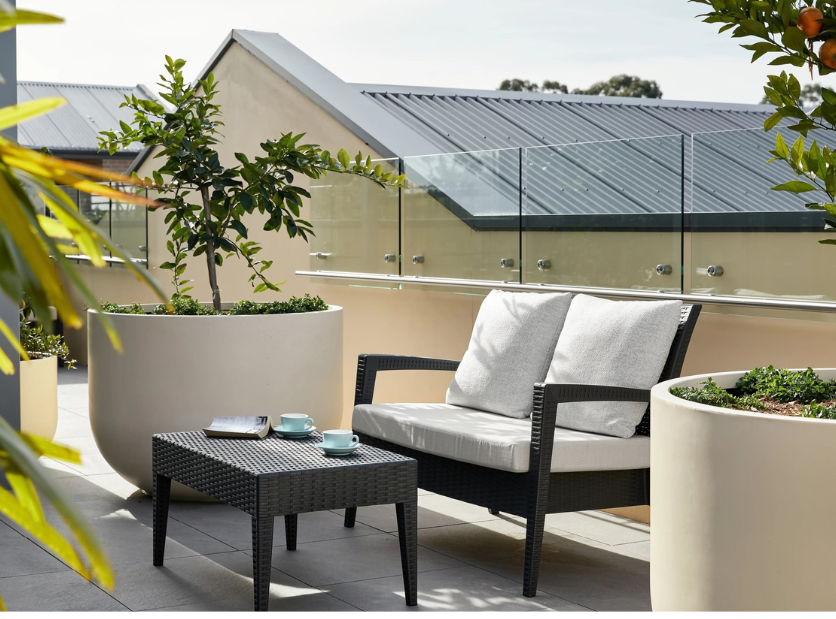
Looking Beyond Purchase Price
The initial cost is only one part of the decision. Maintenance, repairs and replacement can all add to the true cost of ownership.
In aged care, replacing furniture can also mean additional procurement, installation and disruption to familiar spaces. Considering performance over the life of the furniture can support more informed specification decisions.
Specify for the Environment
There is no single outdoor setting. Sun exposure, weather, location, frequency of use and maintenance requirements all influence what will perform well.
The best specification considers the furniture, the people using it, and the environment around it.
For Crown Furniture, this is central to a fit for purpose approach. Outdoor furniture should not simply complete a space. It should continue to perform as the environment changes and as daily use continues.
The real test of outdoor furniture does not happen on installation day. It happens years later.
Because in aged care, durability is about more than making furniture last. It is about helping the environment continue to work.
Get in touch today