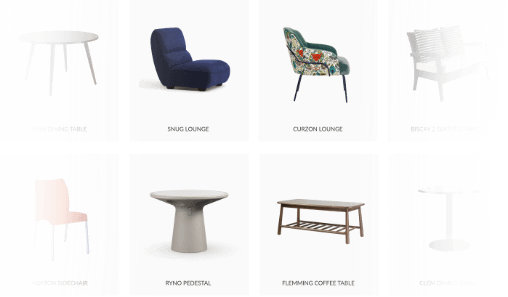
 Save and group your favourite furniture
  Create separate moodboards for each project
  Export your moodboards as PDFs

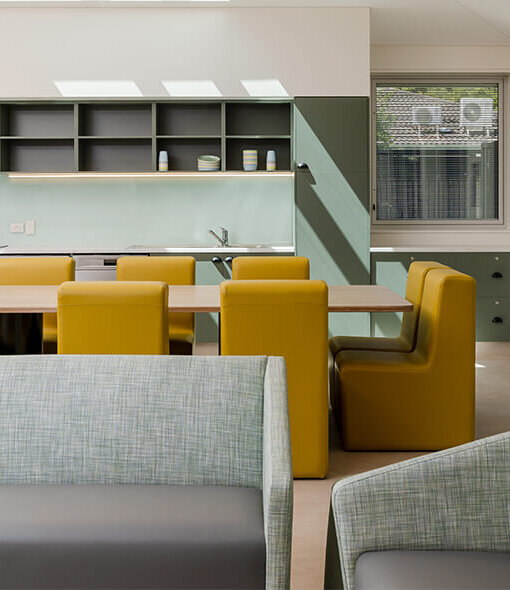

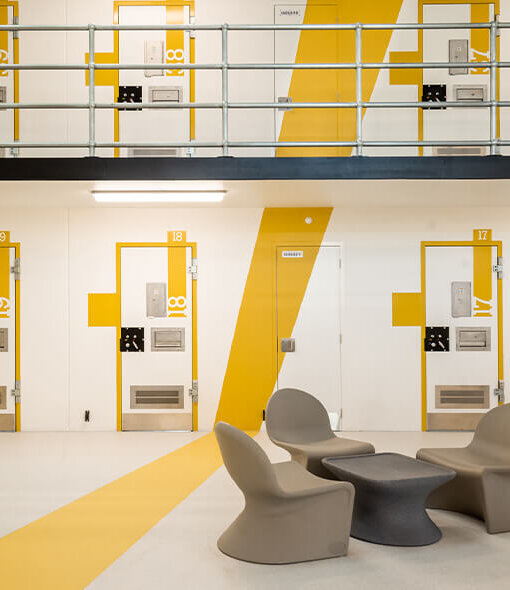
Furniture’s Role in Trauma‑Informed Care Environments
In mental health settings, safety is often defined by policies and clinical systems. Yet one of the strongest influences on how calm, secure and respected a person feels is often overlooked. The furniture that surrounds them.
Furniture is never passive. In trauma‑informed environments, it can either reinforce control and surveillance or support dignity, agency and emotional regulation. Every spatial decision communicates something about safety and care, whether intentional or imposed.
When furniture is selected and placed with purpose, it becomes part of the therapeutic environment itself. Robust and safe where required, yet human, grounding and reassuring.
Safety, Trust and Emotional Regulation
Physical safety is essential. Anti‑ligature design, weighted construction and durable materials protect both residents and staff. Trauma‑informed care also recognises that emotional safety cannot be created through enforcement alone.
Spatial choices play a critical role. Clear sightlines support awareness without surveillance. Open pathways reduce confusion. Seating positioned to provide visibility, orientation and a sense of grounding can help nervous systems settle rather than remain on edge.
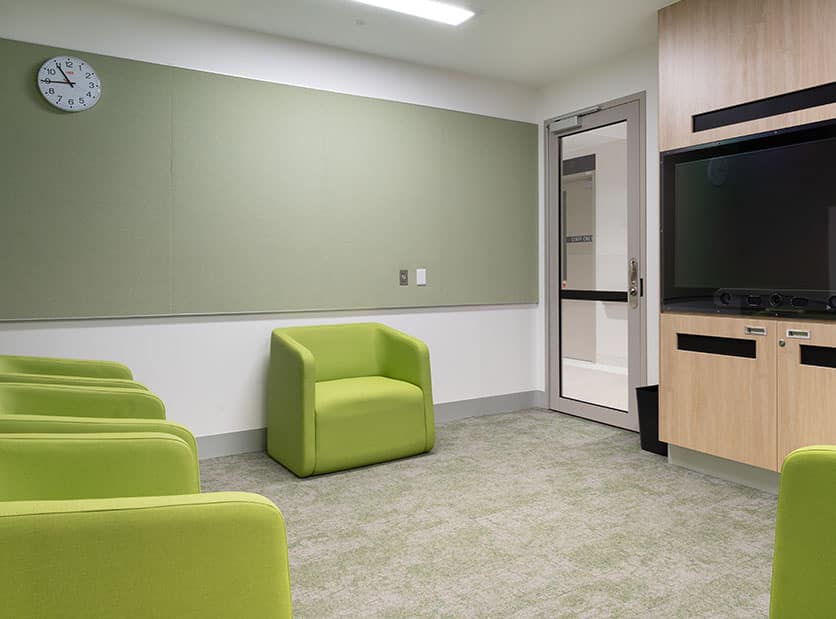
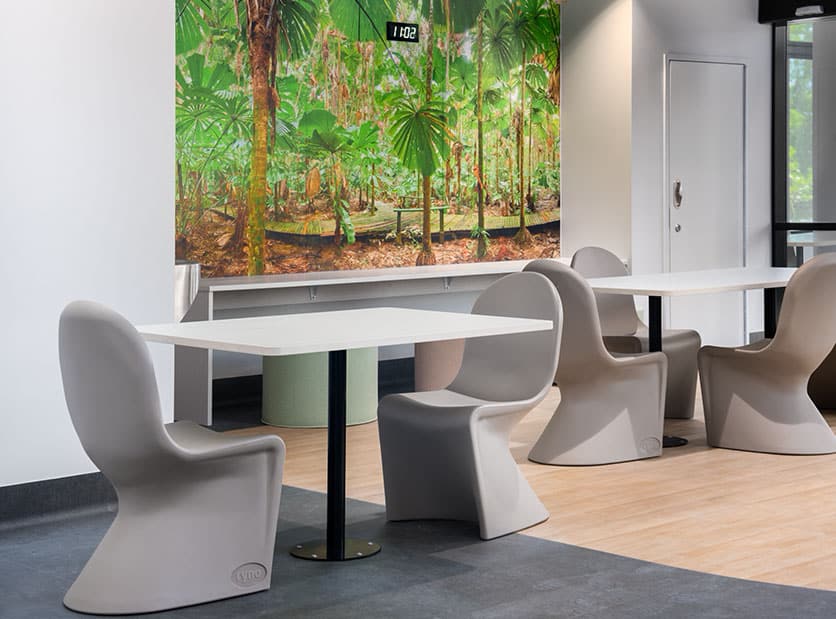
Visual and sensory calm further support regulation. Clean lines, balanced proportions and carefully considered colour palettes reduce cognitive load while maintaining warmth and humanity. Upholstered surfaces, natural finishes and sound‑absorbing elements help limit overstimulation while remaining durable and safe.
When these elements work together, environments feel dependable rather than restrictive.
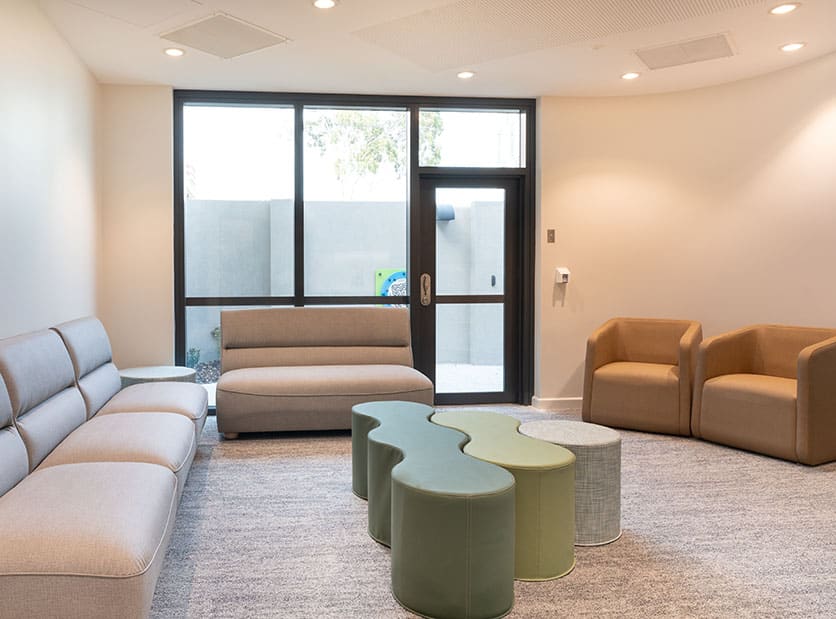
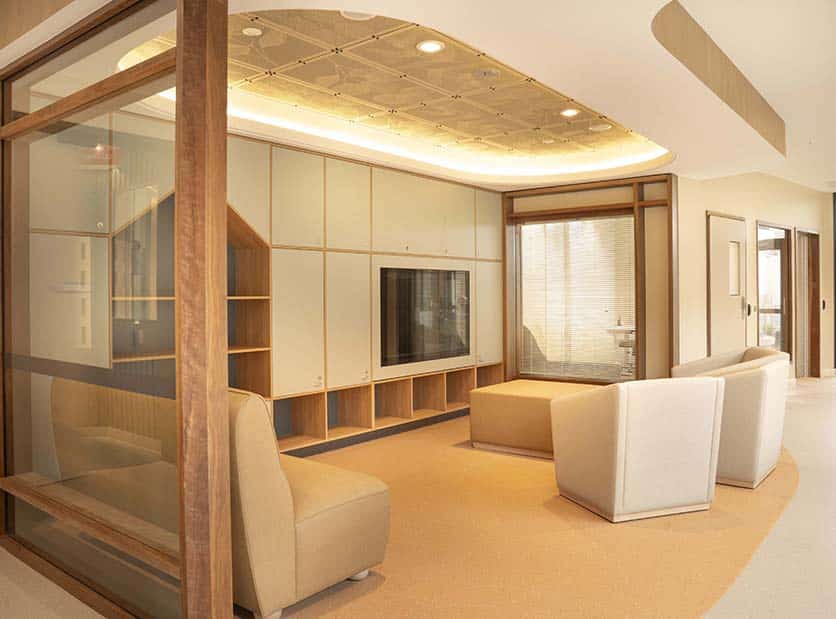
Choice, Connection and Flexibility
Healing is shaped by relationships, but only when engagement feels voluntary. Trauma‑informed environments create opportunities for connection without pressure.
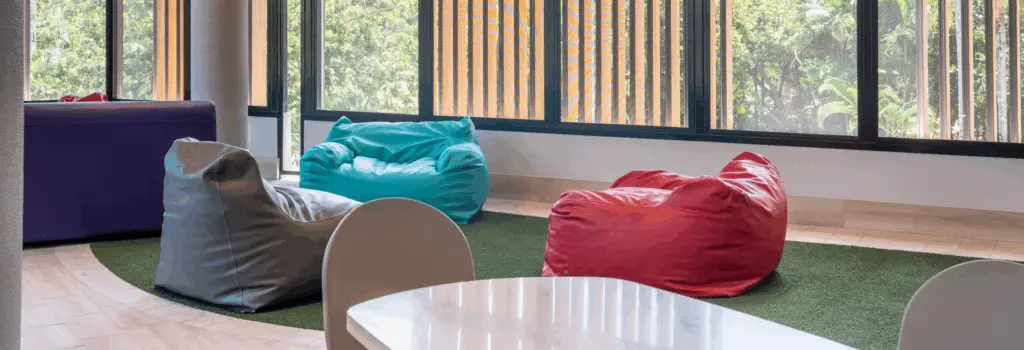
Furniture supports this balance through small seating groupings, flexible layouts and supportive retreat spaces. These configurations encourage interaction while preserving personal space, allowing people to engage at their own pace.
Choice is equally important. Furniture that can be safely moved or adapted gives residents a sense of agency, where to sit, how close to others to be, how a space feels in the moment. When environments respond to people rather than demand compliance, dignity is preserved and empowerment becomes part of daily experience.
Adaptability also supports changing needs. Mental health environments are dynamic, and furniture that allows spaces to shift smoothly between group engagement, individual reflection and quiet social time contributes to calmer, more responsive care.
Where Safety and Healing Meet
The most successful mental health spaces do not draw attention to their design. They feel balanced and dependable, secure without being imposed, durable without feeling harsh.
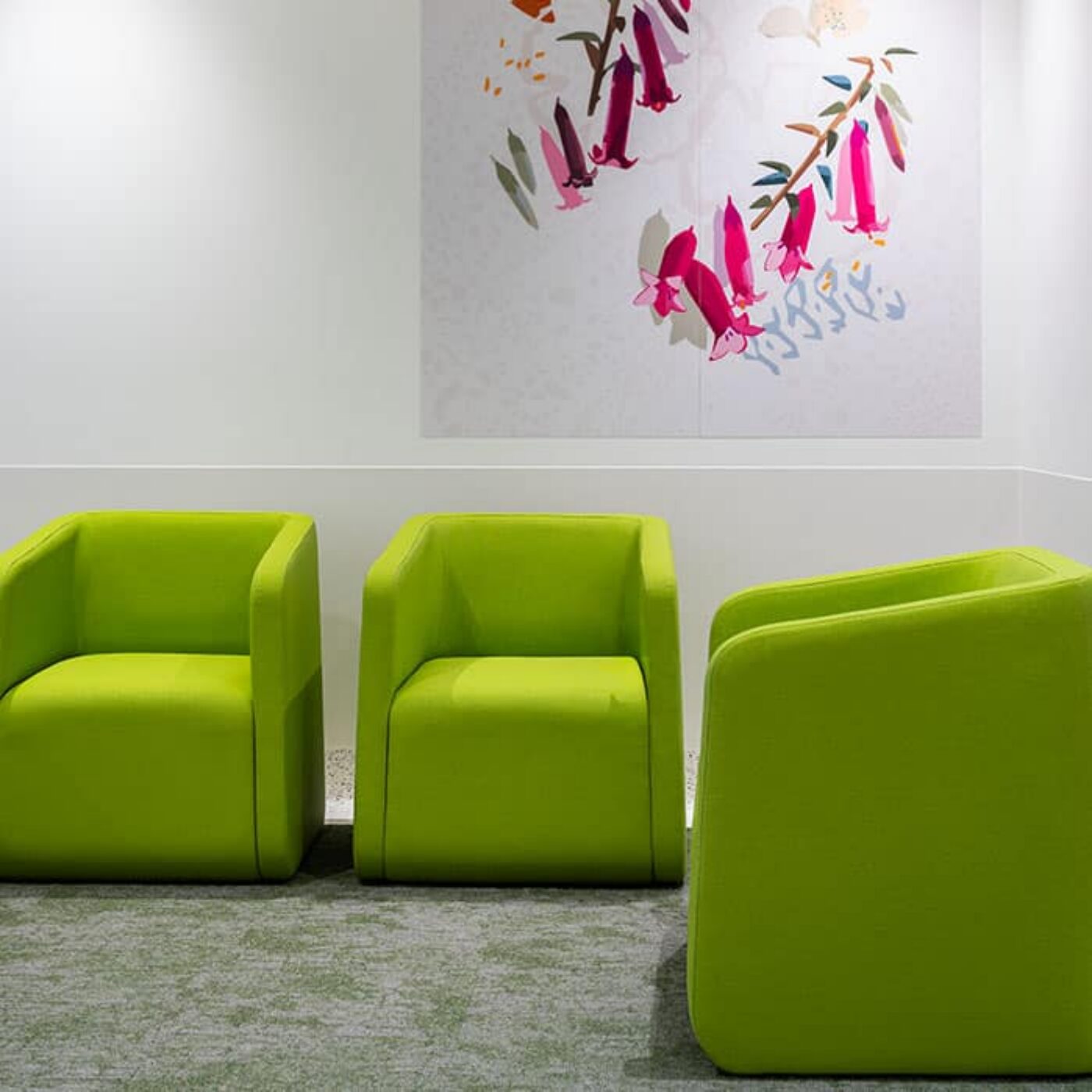
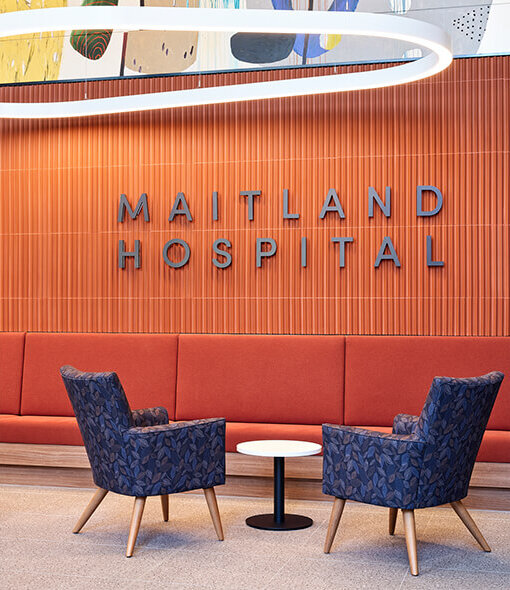
Residential‑inspired forms such as comfortable armchairs, familiar proportions and softer silhouettes help create reassurance and normalcy, while safety remains embedded within the design. The goal is not domesticity, but removing unnecessary barriers between people and their environment.
Well‑considered furniture supports mental health through presence and intention, helping environments feel calmer, safer and more respectful, even in challenging moments.
Trauma-informed thinking requires environments that balance safety, strength and warmth. When furniture is designed with this intent, it supports spaces where people feel protected, while remaining respected.
Supporting Calm, Safety and Care
If you’re considering how your environment supports calm, safety and mental wellbeing, we’re always open to a conversation. Crown Furniture works alongside care teams and designers to create spaces that feel considered, secure and genuinely supportive.



Get in touch today