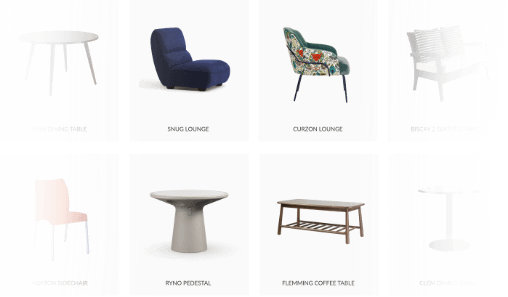
 Save and group your favourite furniture
  Create separate moodboards for each project
  Export your moodboards as PDFs


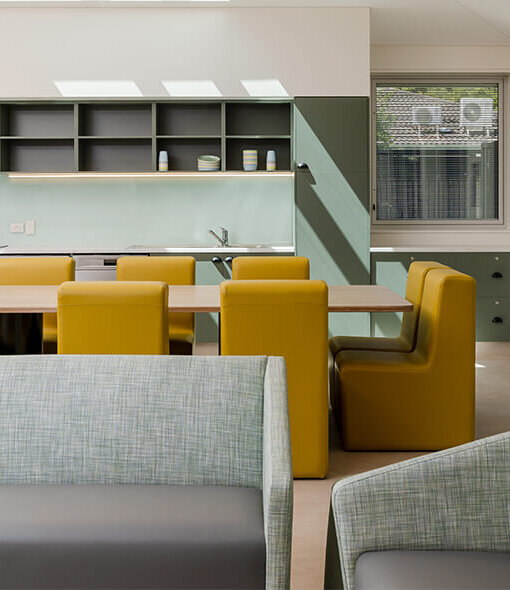

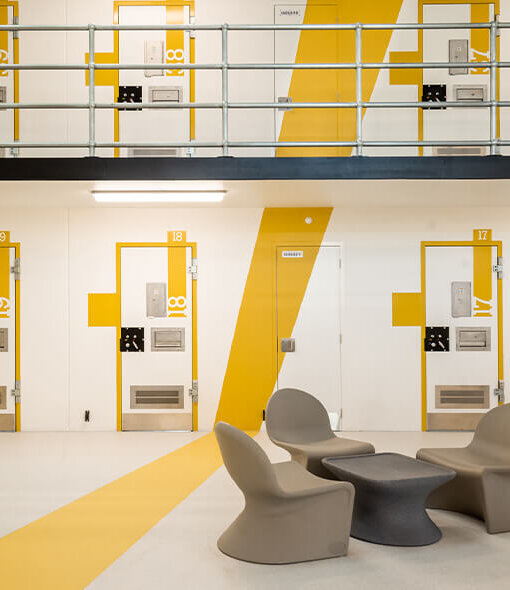
Built for People Who Care
Aged care environments are often discussed in terms of resident comfort and dignity and rightly so. But these spaces are equally shaped by the people who move through them every day, delivering care with consistency, skill, and compassion.
Carers lift, guide, reassure, and respond. Their work is physical, repetitive, and deeply human. Furniture sits within that daily rhythm. When it is not designed with care in mind, even small inefficiencies can begin to accumulate.
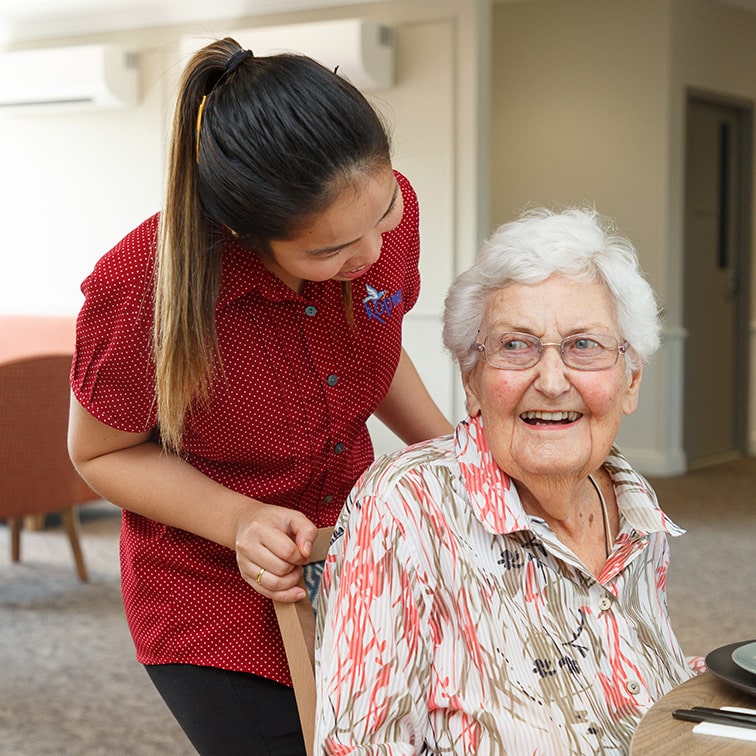
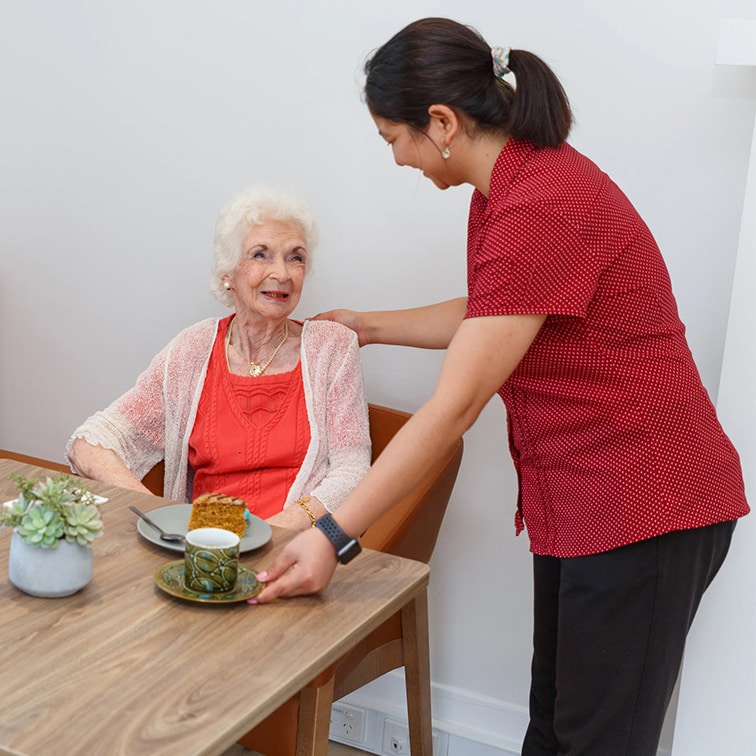
A chair that requires extra effort to reposition. A table that disrupts natural movement. Seating that shifts unpredictably during assisted support. Individually, these moments seem minor. Over time, they contribute to fatigue, interrupt workflow, and shift focus away from care itself.
When Furniture Supports the Work
Well-designed furniture reduces this friction in practical, often overlooked ways. Balanced weight improves handling. Stable construction supports safer interactions. Proportions that allow clear access enable carers to move naturally and confidently around residents.
In practice, this means fewer adjustments, less compensation, and greater consistency throughout a shift. When furniture performs reliably, carers can focus more fully on the person in front of them, rather than the environment around them.
There is also a broader impact. Spaces that feel calm, intuitive, and intentional influence how people behave and interact. They signal respect for those receiving care and for those providing it. In these environments, care feels more supported and more sustainable.
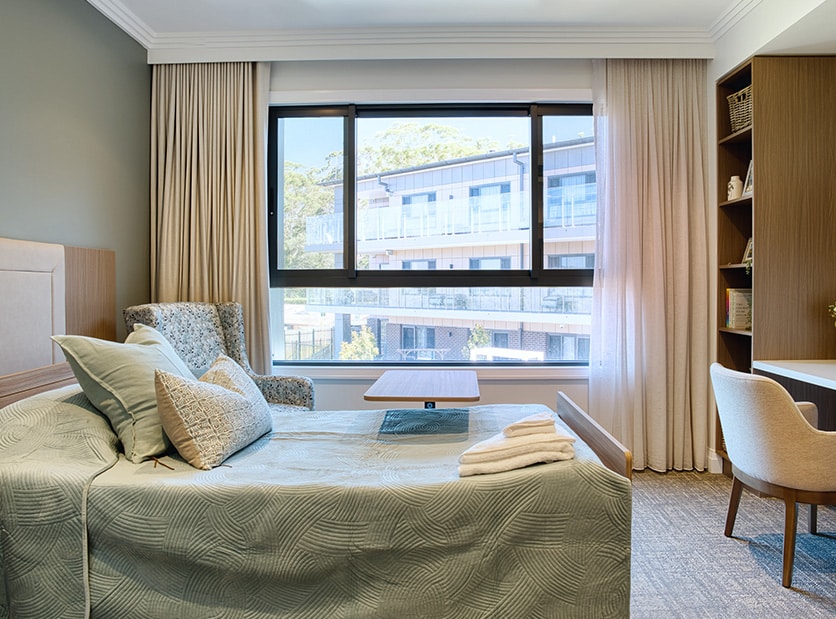
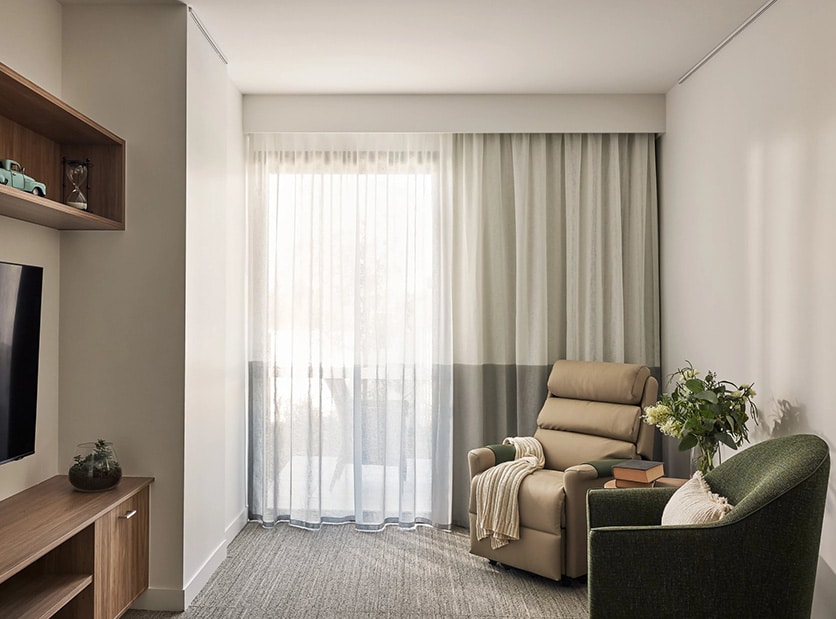
A Shared Foundation for Care
Workforce challenges in aged care are well documented. While many factors influence retention, the physical environment plays a meaningful and often underestimated role. Reducing unnecessary strain and friction helps make demanding roles more manageable over time.
Designing for carers does not compete with designing for residents it reinforces it. Their experiences are closely connected. When carers are supported, the quality, consistency, and continuity of care improves.
This reflects a broader shift in aged care design: environments are no longer seen as passive settings, but as active contributors to care. Furniture, when thoughtfully considered, becomes part of that support system working quietly, consistently, and in service of everyone within the space.

Get in touch today