 Save and group your favourite furniture
  Create separate moodboards for each project
  Export your moodboards as PDFs

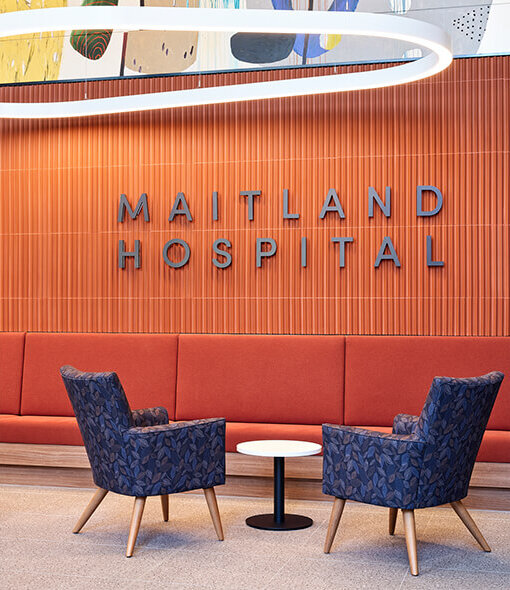
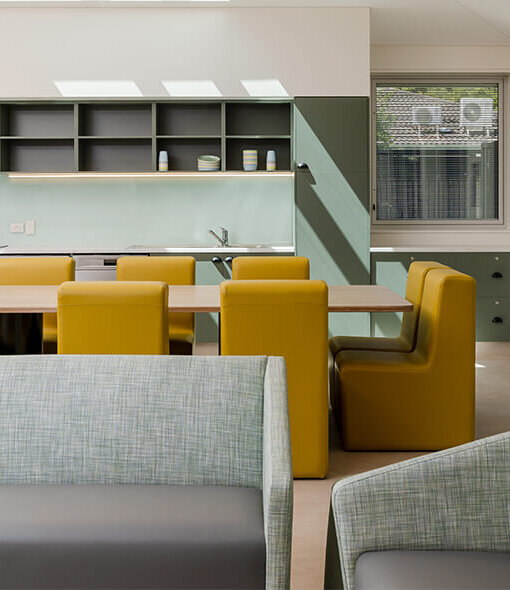

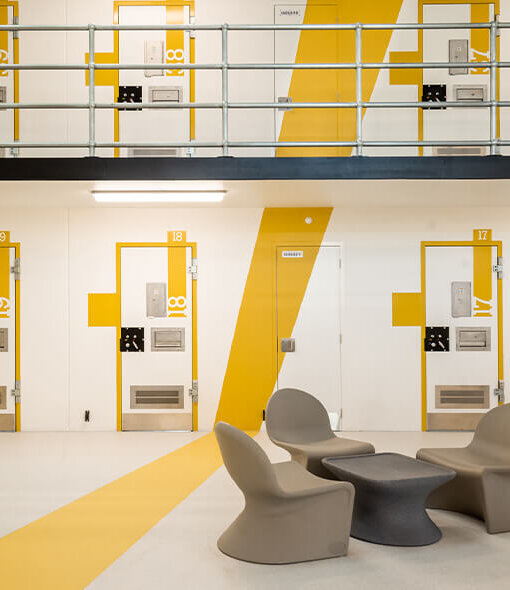
Mental health lounges are more than shared seating areas. They are spaces where patients experience some of their most vulnerable moments, while staff support rest, movement, and social interaction within a clinical setting.
A chair may be used for quiet reflection, a table for shared activities, or a corner seat for time away from stimulation. When furniture is poorly designed, it can introduce hidden risks, restrict mobility, or make spaces feel cold and clinical. When appearance is prioritised over safety, both patients and staff are exposed to unnecessary pressure.
The challenge is clear. Mental health lounges must protect and support patients while remaining calm, adaptable, and practical for staff. Every design decision must balance safety, comfort, and everyday usability to genuinely support recovery and daily routines.
At Crown Furniture, this balance sits at the centre of our approach. With decades of experience in mental health environments, we design furniture that is secure, durable, and welcoming, helping lounges function as therapeutic spaces rather than purely clinical ones.
Safety That Feels Natural
In mental health lounges, safety works best when it is quietly integrated. Protective features should support wellbeing without drawing attention to risk or making spaces feel restrictive.
This is why anti ligature legs, plinths, and floor fixed bases are built into each piece from the outset. These elements help maintain a secure environment while allowing patients and staff to move through spaces with ease. Minimal depth seams and reinforced timber construction reduce opportunities for concealment and make cleaning more efficient during busy shifts. Tamper resistant fixings and durable materials ensure furniture remains dependable in high use areas where pieces are moved and used throughout the day.
By integrating safety into the design itself, pressure on staff is reduced and lounges feel calmer and more considered. Safety becomes part of how the space works rather than a visible barrier to comfort.
Flexible Furniture That Supports Wellbeing
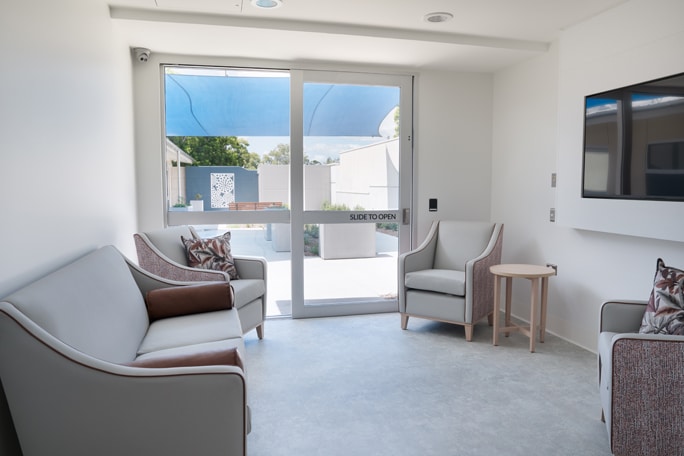
Mental health lounges serve many roles throughout the day, from quiet retreat to social connection and from sensory spaces to areas that support de escalation. Furniture that cannot adapt can limit autonomy, comfort, and the therapeutic potential of the space.
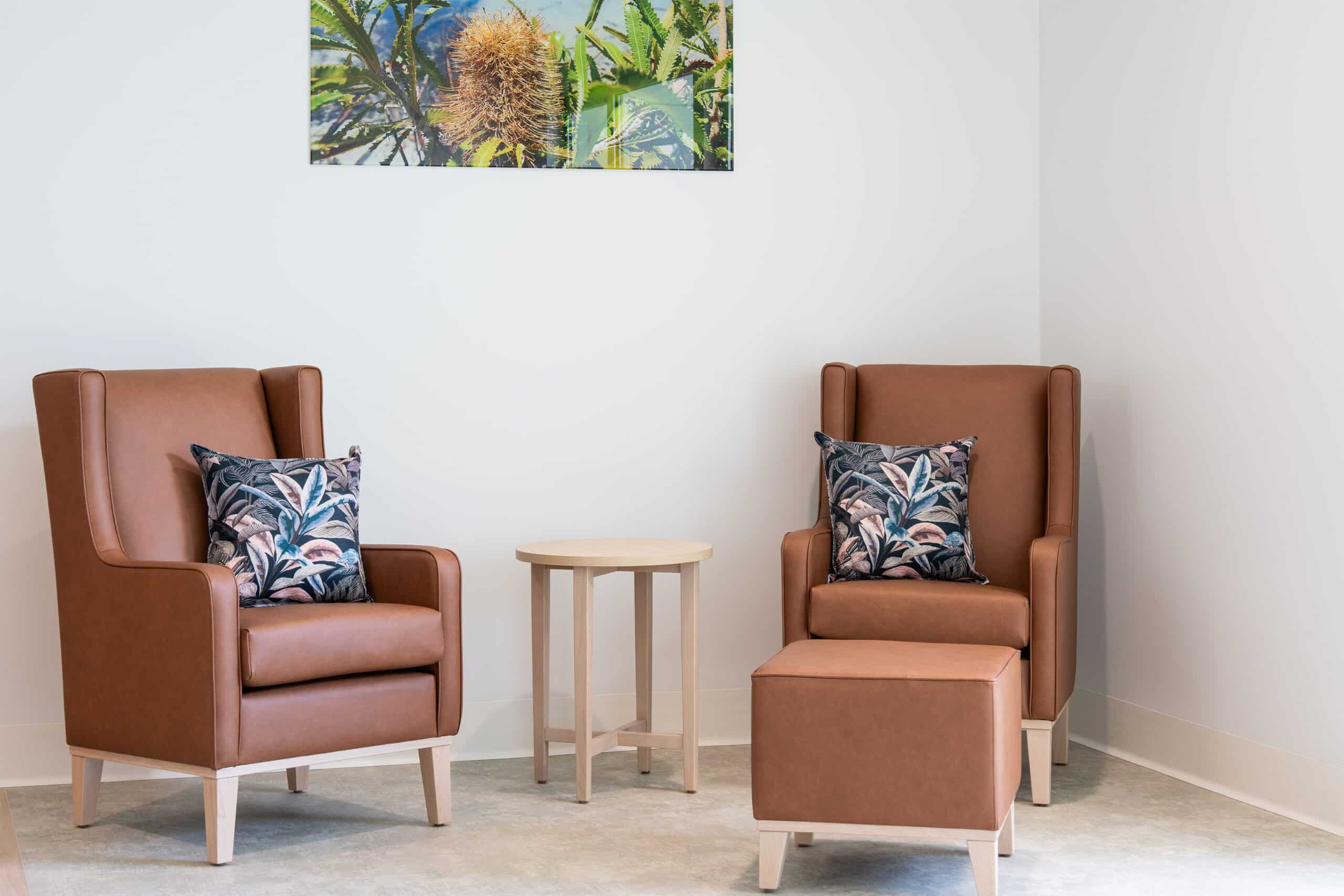
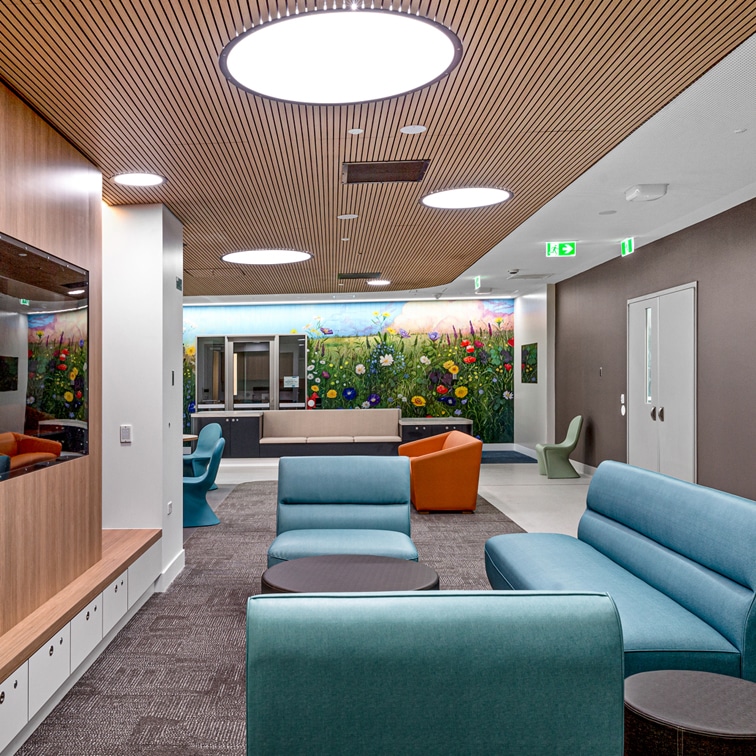
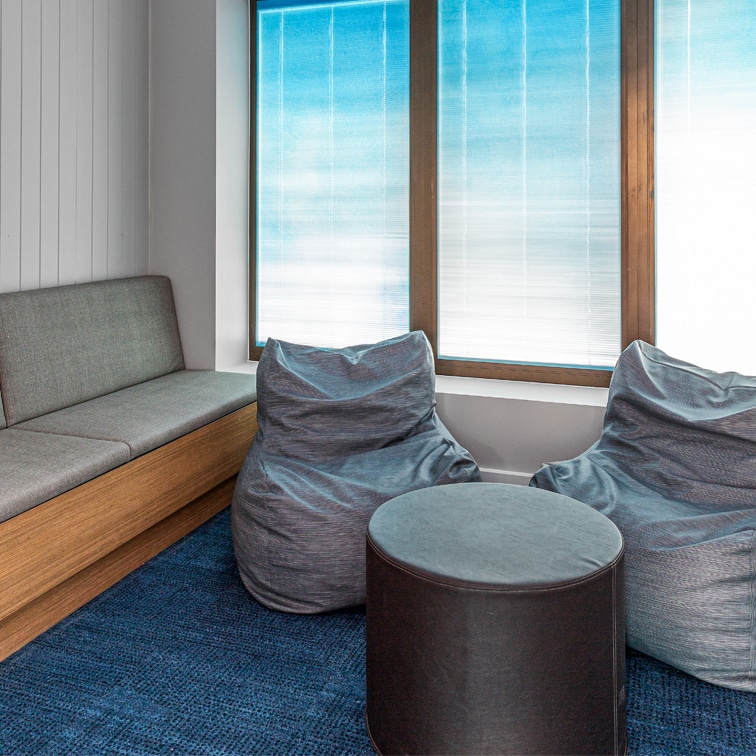
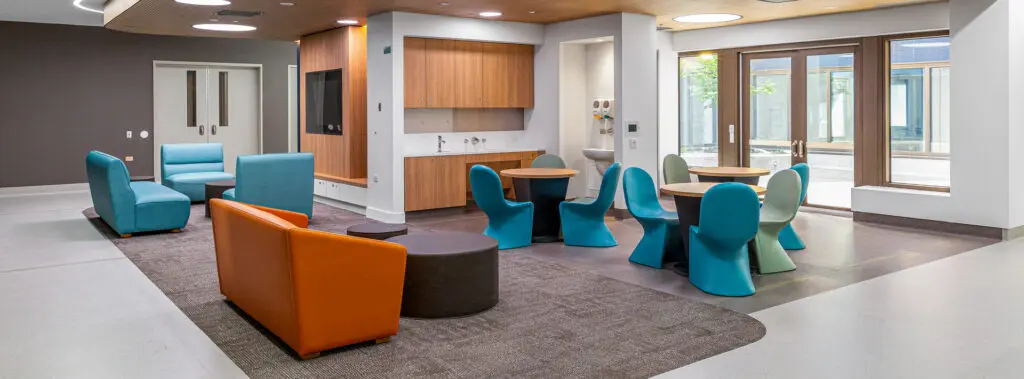
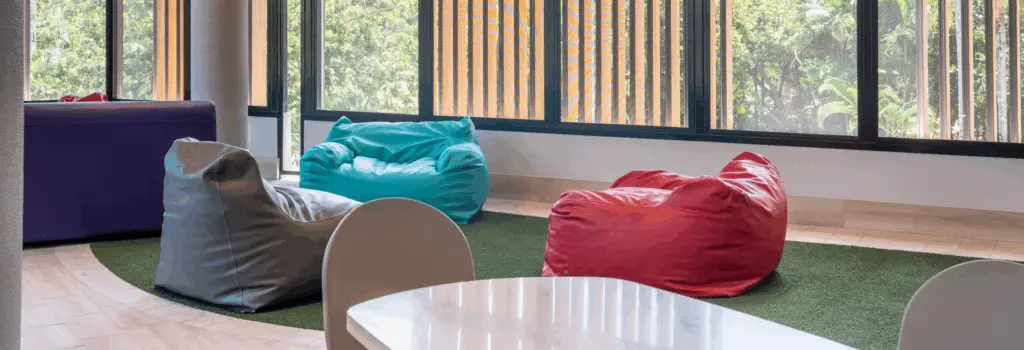
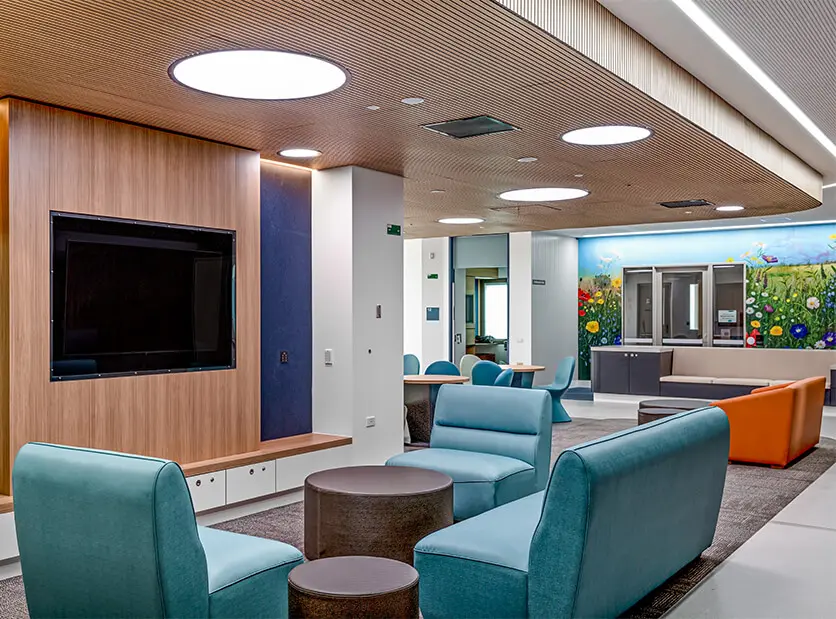
Modular seating allows layouts to change between private and group settings without disrupting the flow of the room. Armless designs reduce physical barriers and support safe movement, particularly when patients need to change position or relocate with staff support. Mood supporting seating and gentle rocking options can offer reassurance in quieter spaces, while high use seating is designed to withstand frequent use without losing its welcoming feel.
When flexibility is paired with homely finishes, lounges become inclusive and supportive environments that respond to the changing needs of both patients and staff.
Materials That Protect and Comfort
Material selection plays a vital role in both safety and wellbeing. Fire rated foams, heavy duty upholstery, and plywood bases with laminate finishes deliver durability, hygiene, and long term performance in demanding healthcare environments.
Materials also shape how a space feels in everyday moments. Smooth surfaces support efficient cleaning. Ergonomic forms assist patients as they sit, stand, or rest. Soft touch finishes help reduce the clinical feel and encourage people to relax and engage with their surroundings.
In this way, furniture becomes more than a functional requirement. It provides quiet support for comfort, dignity, and recovery.
Outcomes That Matter
Well designed mental health lounges deliver meaningful outcomes. They reduce risk, support staff confidence, and encourage calm behaviour, social engagement, and independence. Spaces that feel ordered and welcoming are easier to supervise, easier to maintain, and more comfortable to spend time in.
Durable and adaptable furniture allows lounges to shift from communal use to sensory or de escalation settings as needed. Each piece is considered with recovery focused outcomes in mind, helping patients feel secure and included while supporting staff workflows.
Creating Mental Health Spaces That Work
Crown Furniture partners closely with mental health facilities to create lounges that balance safety, comfort, and adaptability. Every piece is designed to respond to real world challenges, from daily cleaning routines and staff workflows to patient care and long term durability.
Through considered design, purpose built safety features, and welcoming finishes, Crown Furniture helps shape mental health lounges that truly support recovery and everyday wellbeing.
Designing Spaces That Support Calm and Connection
Every moment in a mental health lounge matters. Thoughtful design helps create spaces where patients feel supported and where staff can deliver care more effectively. By bringing together sound design principles and practical solutions, care teams can shape environments that genuinely support recovery, inclusion, and everyday wellbeing.
To explore how Crown Furniture can help you create safer, more welcoming mental health lounges, speak with our team on 1800 194 194 or visit our website.

Get in touch today