 Save and group your favourite furniture
  Create separate moodboards for each project
  Export your moodboards as PDFs



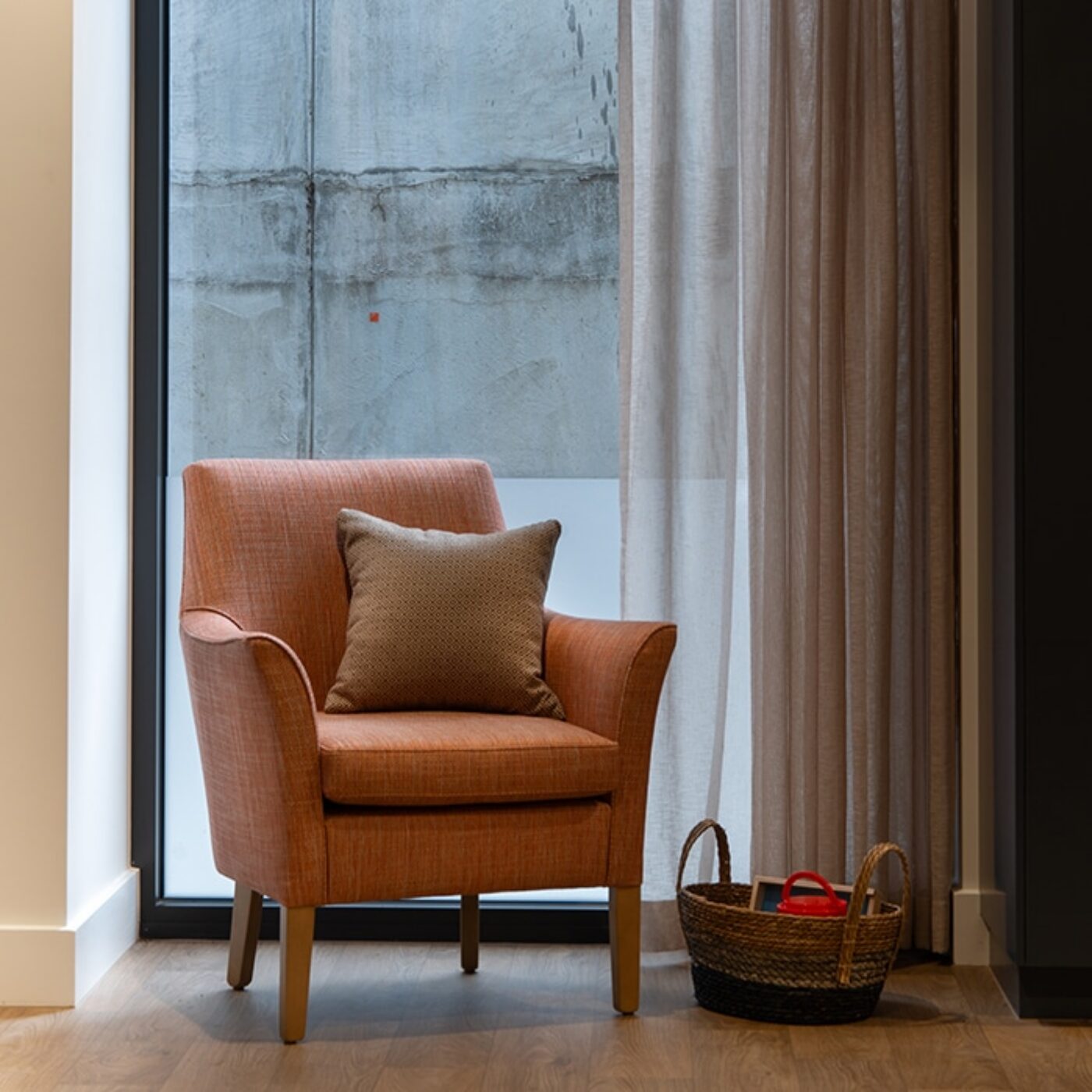
Managing Safety Risk Through Everyday Furniture Performance
In residential aged care, safety risk rarely announces itself. It develops over time through repeated, ordinary actions such as sitting, standing, leaning for support, cleaning, and being assisted. When furniture does not consistently support these moments, small compromises build until they emerge as incidents, audit findings, or pressure against the Aged Care Quality Standards.
Furniture plays an active role in this process. Its performance shapes manual handling outcomes, infection control, evacuation readiness, and resident confidence well before risk is formally recognised. Yet it is often approached as a fixed fitout choice rather than a working element within safety and compliance systems.
Viewed through a risk and quality lens, furniture becomes part of how providers demonstrate duty of care over time.
What Performance Looks Like in Practice
Aged care environments place constant demands on furniture. Residents move at different speeds and often use furniture for reassurance as much as support. Staff work efficiently, spaces are cleaned repeatedly, and layouts adapt as needs change.
Fire safety highlights the gap between specification and real use. Reduced mobility, shared living environments and slower evacuation times mean materials must perform reliably under genuine conditions. Fire‑retardant foams, compliant upholsteries and components tested to AS/NZS 1530.3 have become baseline expectations.
As audit scrutiny increases, providers are also expected to produce clear documentation. Furniture that meets standards on paper but lacks test data or supplier evidence introduces avoidable compliance risk. When safety is embedded at a material level, regulatory expectations can be met without changing how a space feels or functions.
Everyday Movement, Better Supported
Falls remain one of the most closely monitored risks in residential aged care. While they cannot be eliminated, furniture has a measurable impact on how demanding everyday movement becomes.
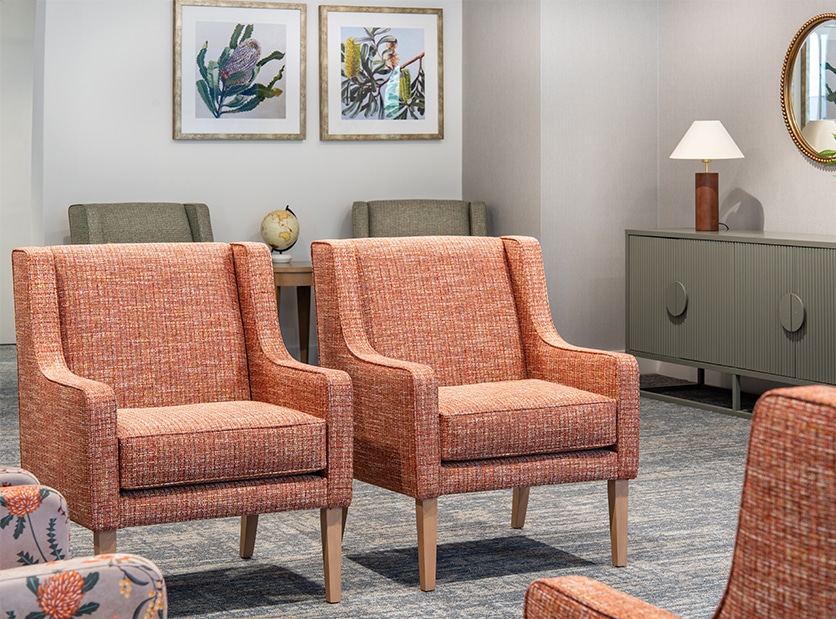
Seat height, stability and the response of an armrest influence how confidently someone stands or sits. Furniture that behaves predictably reduces hesitation and reliance on assistance, supporting both independence and safer manual handling practices.
These details may seem minor in isolation. Over time, they influence incident trends, staff workload and how comfortably residents navigate their environment, outcomes closely tied to safety and quality expectations.
Hygiene That Stands Up Over Time
Infection control is both an operational necessity and a compliance requirement. Furniture that cannot tolerate frequent cleaning places pressure on staff and increases the risk of hygiene breakdowns.
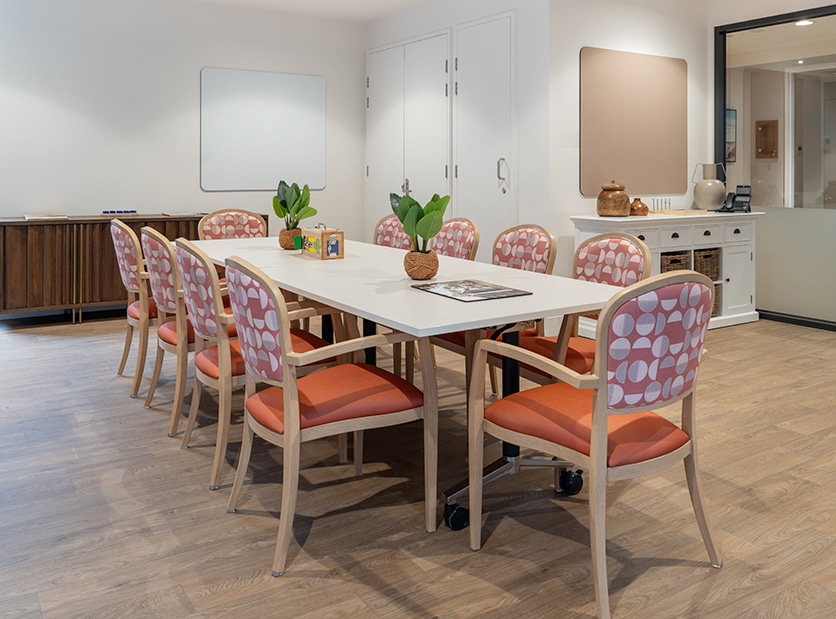
Durable upholsteries, moisture‑resistant finishes and seamless construction support consistent cleaning without visible deterioration. Avoiding deep seams and porous materials further reduces the potential for contaminants to accumulate.
When furniture aligns with established cleaning routines, hygiene becomes part of everyday operations rather than a recurring challenge during reviews or outbreaks.
Safety That Requires No Explanation
The most effective safety features are rarely noticed. Furniture that moves smoothly, responds predictably and behaves as expected allows care to proceed without interruption and residents to engage with their surroundings more confidently.
When performance is intuitive, safety becomes enabling rather than directive. Physical and cognitive effort is reduced across the environment, supporting calmer routines and more reliable outcomes. This kind of effectiveness comes from materials and construction chosen to perform consistently over time.
An Environment That Continues to Meet Standards
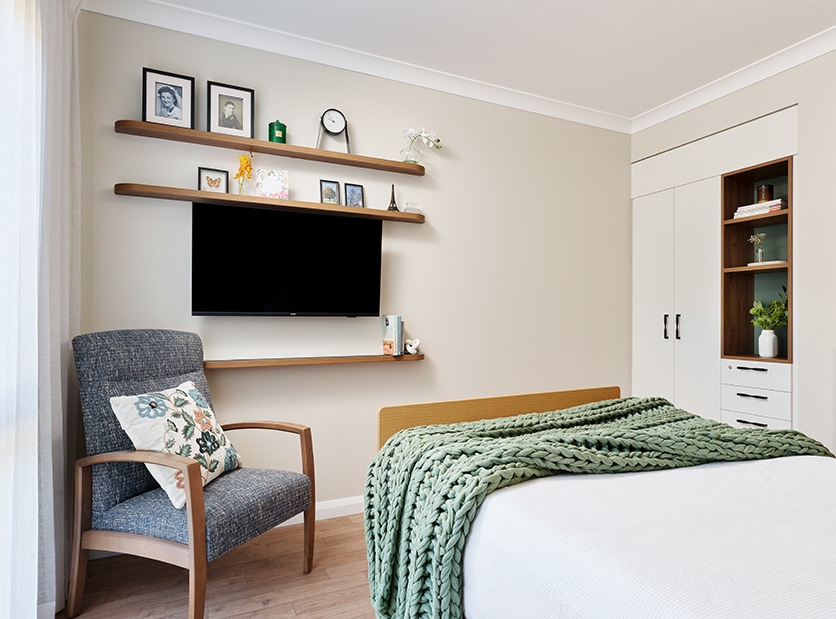
Residential aged care environments are not static. Needs evolve, standards are refined, and expectations around accountability continue to rise. Furniture that is reviewed and managed as an ongoing asset is better positioned to support long‑term safety outcomes than pieces assumed to perform indefinitely.
Safety in aged care is cumulative. It is shaped by how environments support daily use, stand up to regulatory scrutiny, and continue to perform well beyond installation.
Built for Everyday Safety in Residential Aged Care
Crown Furniture designs furniture that supports safety, hygiene and compliance in real aged care environments. Our focus is on materials, performance and evidence that stand up to everyday use and regulatory review.
Speak with our team about furniture designed to perform safely over time.
Get in touch today